Category: Uncategorized

  • Silverware Organizer with Lid: A Practical Guide to Countertop Utensil Storage

    Silverware Organizer with Lid: A Practical Guide to Countertop Utensil Storage

    Keeping everyday utensils organized can make a noticeable difference in how a kitchen functions. Forks, spoons, knives, serving utensils, and other frequently used items tend to accumulate around food-preparation areas, especially when there is limited drawer space or when meals are served for several people at once. A countertop silverware organizer offers an alternative by keeping commonly used utensils visible, separated, and easy to reach.

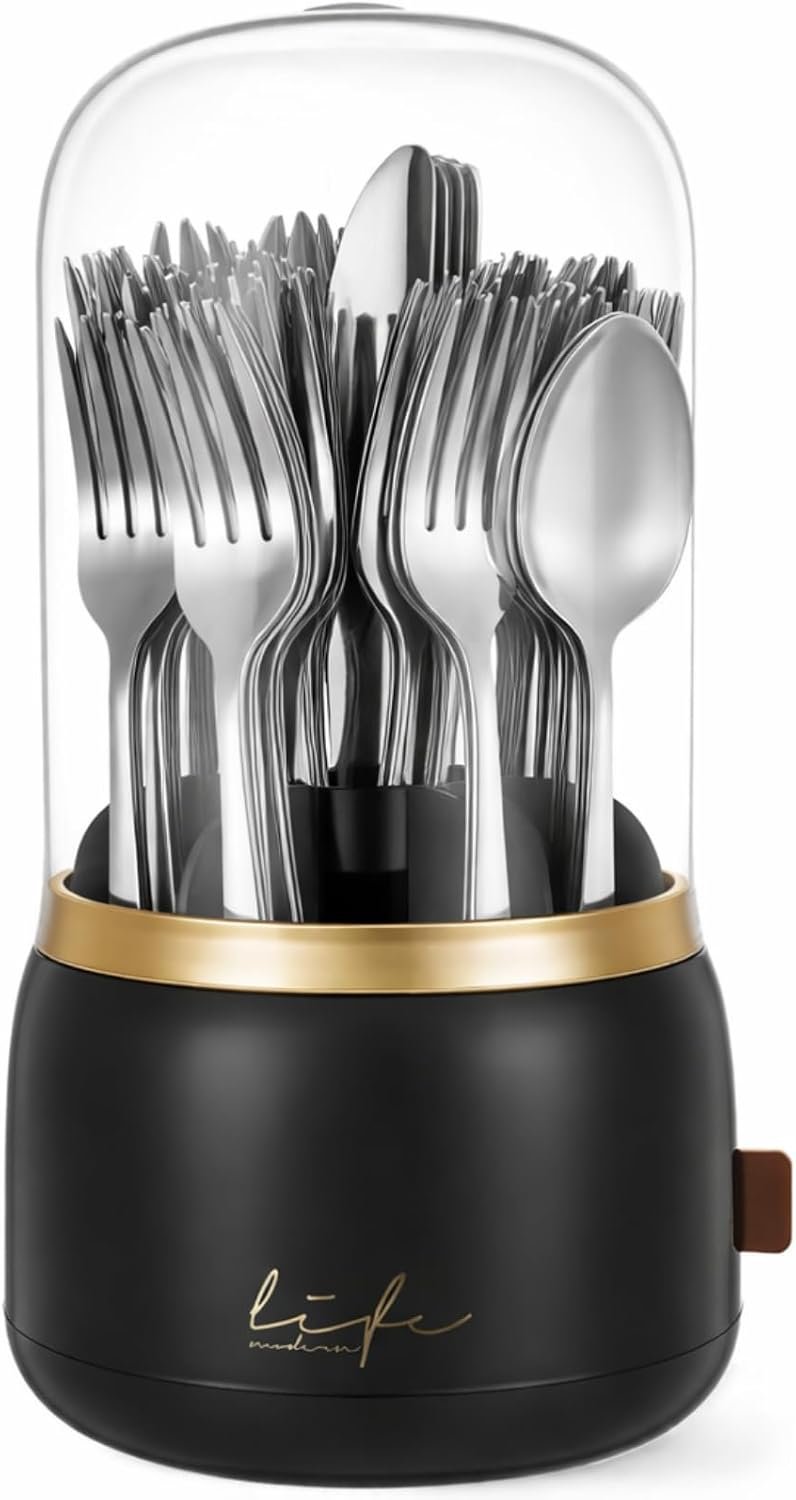
    The Silverware Organizer with Lid and 360 Rotation is designed as a countertop utensil holder with seven storage sections. It is intended to accommodate standard silverware and most steak knives measuring up to approximately 8.5 inches, while its rotating design allows access from different directions. A lid is also included, providing an additional option for covering the stored utensils when the organizer is not being actively used.

    This type of organizer can be useful in everyday kitchens, dining areas, outdoor gatherings, parties, and other situations where utensils need to remain accessible without taking up an entire drawer. At the same time, countertop storage is not the right solution for every kitchen. Available space, cleaning preferences, utensil sizes, and how often the organizer will be used are all worth considering.

    This guide explains how a seven-slot rotating silverware organizer works, what its features mean in practical terms, how it can be used, and what to consider before adding one to a kitchen organization system.

    What Is a Countertop Silverware Organizer?

    A countertop silverware organizer is a storage container designed to hold utensils outside of a traditional kitchen drawer. Instead of placing forks, knives, and spoons horizontally inside a compartmented drawer, utensils are generally stored upright or at an angle in separate sections.

    This arrangement can be particularly convenient for utensils that are used throughout the day. Someone preparing breakfast, setting a dining table, or serving food can reach for the necessary utensil without opening a drawer.

    The organizer discussed here uses a seven-slot layout, giving users multiple sections for separating different types of utensils. Depending on how a household organizes its kitchen, the compartments can be assigned to forks, tablespoons, teaspoons, knives, serving utensils, cooking tools, or other frequently used items.

    The rotating structure adds another practical element. Rather than requiring someone to reach around the organizer, the holder can be turned so that a particular section is positioned closer to the person using it.

    The included lid provides a way to cover the organizer between uses. This can be useful when utensils are being stored on a countertop, dining station, outdoor serving area, or another exposed location.

    Key Features of the Silverware Organizer

    Understanding the individual features is more useful than simply looking at the organizer as another kitchen container. Each design element addresses a particular storage problem.

    Seven Separate Storage Slots

    One of the main characteristics of this organizer is its seven-slot configuration.

    Separate compartments can make it easier to establish a consistent storage system. For example, a household might dedicate different sections to:

    • Dinner forks
    • Salad forks
    • Spoons
    • Teaspoons
    • Table knives
    • Steak knives
    • Serving utensils

    There is no requirement to use the compartments in this exact way. The layout can be adapted depending on the types of utensils a household uses most frequently.

    Having multiple sections can also reduce the tendency for utensils to become mixed together. Instead of reaching into one large container filled with everything, users can identify the general category of utensil they need.

    For kitchens where multiple people regularly use the same countertop area, this separation can also make putting utensils away more straightforward.

    360-Degree Rotation

    The rotating design is another notable feature.

    A stationary utensil holder can require users to walk around it or reach across the countertop to find a particular section. A rotating organizer provides a different approach: the container can be turned so the desired compartment comes into a more convenient position.

    This can be especially helpful when the organizer is placed in the middle of a kitchen island, dining table, buffet station, or shared preparation area.

    The rotation may also make the organizer easier to use when several people are accessing it from different directions. Instead of everyone approaching the same side, the holder can be repositioned as needed.

    As with any rotating kitchen accessory, the exact movement and stability will depend on how the organizer is designed and how it is placed on the countertop. A level, uncluttered surface is generally preferable.

    Included Lid

    A lid gives the organizer another storage option.

    Open countertop utensil holders provide immediate access, but they also leave the stored items exposed. A cover can be useful when the utensils are being stored for a longer period or when the organizer is positioned in an area where it may collect dust or kitchen debris.

    The lid can also be practical during events. If utensils are prepared in advance for a party or gathering, covering the organizer until it is needed can provide an additional layer between the stored utensils and the surrounding environment.

    The lid does not eliminate the need for normal utensil washing and hygienic food-handling practices. Clean, dry utensils should be placed into storage, and the organizer itself should be maintained according to the manufacturer’s care instructions.

    Capacity for Standard Utensils

    The organizer is designed around standard kitchen silverware and is described as accommodating most steak knives up to approximately 8.5 inches.

    This measurement is important because kitchen utensils vary considerably in length. A container that works well for teaspoons and dinner forks may not accommodate longer knives or oversized serving tools.

    Before using the organizer for particularly large utensils, it is sensible to compare their dimensions with the available compartment space.

    The stated knife capacity should also be understood as a general size guideline rather than a guarantee that every knife measuring below the listed length will fit comfortably. Handle shape, blade width, and the internal dimensions of a particular compartment can affect how an item sits inside the holder.

    Countertop Design

    Unlike drawer organizers, this style is intended to remain visible on a countertop or other flat surface.

    That makes it useful in kitchens where drawer space is limited. It can also serve as a dedicated utensil station when several people need access to silverware during meals.

    The black finish gives the organizer a relatively neutral appearance that can work with many kitchen color schemes. However, the visual fit will naturally depend on the rest of the kitchen’s décor and countertop materials.

    Why Countertop Utensil Storage Can Be Useful

    Drawer storage is common, but it is not always the most convenient solution.

    Some kitchens have shallow drawers, limited drawer capacity, or drawer layouts that are already occupied by cooking tools. Others may have an open kitchen design where a countertop utensil station is more practical.

    Countertop storage can provide several organizational advantages.

    First, frequently used utensils remain visible. This can reduce the need to repeatedly open and close drawers during meal preparation.

    Second, separate compartments make categorization easier. Instead of sorting through a mixed collection of utensils, users can establish dedicated areas.

    Third, a countertop organizer can be moved to a different location when needed. During a family meal, for example, it can be positioned closer to the dining area. For a party, it can become part of a buffet setup.

    The tradeoff is that countertop storage requires physical space. A holder that is convenient on a large kitchen island may feel intrusive on a small counter.

    How It Can Be Used

    A rotating seven-slot organizer can serve several purposes beyond simply holding everyday silverware.

    Everyday Kitchen Organization

    For daily use, the simplest arrangement is to assign each compartment to a particular utensil category.

    Forks can occupy one section, spoons another, and knives another. Additional compartments can be reserved for less frequently used silverware or serving tools.

    This approach creates a predictable routine. After washing dishes, utensils can be returned to their designated sections instead of being placed wherever there is available space.

    Over time, consistent organization can make the countertop area easier to maintain.

    Family Dining

    A countertop organizer can also function as a shared silverware station.

    Rather than placing every type of utensil directly on the dining table, the organizer can remain in a convenient location where family members can take what they need.

    The rotating feature can be particularly useful when the organizer is positioned where people approach it from different directions.

    This arrangement can also be useful for casual meals where everyone serves themselves.

    Parties and Gatherings

    Large meals often create a temporary need for additional utensil organization.

    A seven-section holder can be prepared before guests arrive and placed near a buffet table, serving area, kitchen island, or dining space.

    Different compartments can be assigned to different types of utensils. For example, forks, spoons, dinner knives, and specialty utensils can each have their own location.

    The lid can be used while the organizer is waiting to be put into service.

    For outdoor events, however, users should consider environmental conditions such as wind, dust, moisture, and uneven surfaces. A countertop organizer is generally most practical when placed on a stable and suitable surface.

    Outdoor Dining

    The organizer may also be useful for patios, outdoor kitchens, picnics with a suitable table, or casual gatherings.

    Its compartment-based design can reduce the need for several separate cups or containers holding different types of silverware.

    If it is used outdoors, it is still important to protect clean utensils from dirt and other contaminants. The included cover may be useful when the utensils are prepared ahead of time.

    After outdoor use, the organizer should be cleaned appropriately before being returned to regular kitchen storage.

    Buffet Stations

    Buffet-style meals often benefit from clearly separated utensils.

    A rotating holder can be placed beside serving dishes so guests can access forks, spoons, and knives without searching through a single container.

    The seven compartments provide flexibility for larger gatherings where several utensil categories are needed.

    The organizer can also be repositioned as guests move around the serving area.

    Specialty Utensils

    Although designed around silverware, some compartments may be useful for other small kitchen tools, provided their dimensions and shape are compatible.

    Examples could include small serving spoons, dessert utensils, reusable straws, or other compact items.

    However, sharp or unusually shaped objects should be stored carefully. The organizer should not be overloaded with items that could make it unstable or difficult to use.

    Organizing the Seven Compartments Efficiently

    The number of compartments provides flexibility, but good organization still depends on how they are assigned.

    One approach is to organize by frequency of use.

    The most frequently used utensils can occupy the sections that are easiest to access. Less frequently used items can be placed in the remaining compartments.

    Another approach is to organize by meal type.

    For example, a household might keep everyday forks and spoons in several sections while reserving another compartment for serving utensils.

    A third option is to organize according to household habits. Families that use many knives may benefit from dedicating additional space to knives, while households that frequently serve salads or desserts may prefer compartments for those utensils.

    There is no universally correct configuration. The most useful arrangement is the one that matches the way the kitchen is actually used.

    Who It May Be Suitable For

    A countertop silverware organizer may be useful for several types of households.

    Kitchens With Limited Drawer Space

    If drawers are already filled with utensils, cooking tools, towels, or other equipment, moving frequently used silverware to the countertop can free up some internal storage.

    Busy Family Kitchens

    Families often use the same forks, spoons, and knives repeatedly throughout the day. Keeping these items accessible can simplify routine meal preparation and table setting.

    People Who Host Gatherings

    Anyone who regularly prepares meals for groups may appreciate having a dedicated utensil station that can be moved to a buffet or dining area.

    Shared Living Spaces

    In shared kitchens, clear organization can reduce confusion about where common utensils belong.

    People Who Prefer Visible Organization

    Some users simply prefer to see frequently used items rather than opening drawers to locate them. A compartmentalized countertop holder fits that organizational style.

    Small Food-Service or Hosting Areas

    The organizer can also be considered for informal serving stations where utensils need to be grouped together without taking up a large amount of table space.

    Important Things to Consider Before Using One

    A countertop organizer can be practical, but several factors should be considered.

    Available Counter Space

    The most obvious consideration is where the organizer will go.

    Measure the intended area before placing it on a crowded countertop. Leave enough surrounding space to access the compartments comfortably and rotate the holder without hitting nearby appliances, containers, or walls.

    Utensil Dimensions

    Standard forks and spoons generally have relatively predictable dimensions, but knives and serving utensils can vary significantly.

    If you intend to store longer steak knives, compare their dimensions with the organizer’s stated capacity.

    Oversized utensils may not sit properly even if they appear close to the stated maximum length.

    Cleaning Requirements

    Any container used to store food-contact utensils should be kept clean.

    Before cleaning the organizer, check the manufacturer’s instructions for the appropriate method. Different materials and construction types may have different care requirements.

    Avoid assuming that an organizer is dishwasher-safe unless the manufacturer specifically indicates it.

    Stability

    A rotating organizer should be placed on a level surface.

    Avoid placing it where it can easily be knocked over, particularly if it is filled with heavy metal utensils.

    The way utensils are distributed can also affect balance. Keeping very heavy items concentrated in one section may produce a different balance than distributing them more evenly.

    Open Versus Covered Storage

    The included lid makes covered storage possible, but users should decide whether they prefer to keep it on or off during everyday use.

    For frequent access, an open configuration may be more convenient. For periods of storage, a cover may be preferable.

    Cleaning Before Storage

    Only clean, dry utensils should be placed into a storage container.

    Putting wet silverware into an enclosed holder can create an environment where moisture remains trapped. Allow utensils to dry properly before storing them.

    Cleaning and Maintenance

    Kitchen organizers are often overlooked when cleaning routines are established. Yet the organizer itself can come into contact with utensils, hands, food particles, and kitchen dust.

    A simple maintenance routine can help keep it in good condition.

    Start by removing all utensils from the compartments. Emptying the holder makes it easier to see whether crumbs or other debris have accumulated.

    Clean the surfaces using the method recommended by the manufacturer. Pay particular attention to corners, compartment edges, and areas around the rotating mechanism.

    If the design includes moving components, avoid forcing them if they become difficult to rotate. Check for debris or objects that may be interfering with movement.

    After cleaning, allow the organizer to dry appropriately before returning utensils to it.

    Regular cleaning frequency will depend on how often the organizer is used and where it is located.

    An organizer used every day in a busy kitchen may require more frequent cleaning than one used occasionally for special gatherings.

    Countertop Organizer vs. Drawer Organizer

    Drawer organizers and countertop holders solve similar problems through different approaches.

    A drawer organizer keeps utensils hidden from view and preserves a clean countertop appearance. It can be useful for people who prefer minimal visible storage.

    The disadvantage is accessibility. Users need to open the drawer whenever they need a utensil, and drawer space may be limited.

    A countertop organizer does the opposite. It uses visible surface space but provides immediate access.

    The choice therefore depends on kitchen layout and personal organization preferences.

    Countertop Organizer vs. Traditional Utensil Cup

    A basic utensil cup is one of the simplest countertop storage solutions. It usually provides one large compartment where utensils stand together.

    This approach can be inexpensive and straightforward, but separating different utensil types can be more difficult.

    A seven-slot organizer introduces dedicated sections, making categorization easier.

    The tradeoff is that a compartmentalized holder may occupy more physical space than a simple cup.

    For someone who regularly mixes forks, spoons, and knives together, the additional compartments may offer a more structured arrangement.

    Countertop Organizer vs. Large Utensil Caddy

    A larger utensil caddy may provide greater capacity, especially for serving tools and cooking utensils.

    However, greater capacity can also mean a larger footprint.

    A seven-slot rotating organizer occupies a different part of the organizational spectrum. It provides multiple dedicated areas while remaining focused on everyday silverware and similarly sized utensils.

    The appropriate option depends on whether the priority is maximum capacity or structured access to a defined collection of utensils.

    Practical Tips for Getting More From a Seven-Slot Organizer

    A few simple habits can make countertop storage more effective.

    Create Permanent Categories

    Try to keep each compartment associated with a specific category rather than changing the arrangement every day.

    Consistency makes it easier for everyone in the household to return utensils to the correct location.

    Keep Frequently Used Items Accessible

    Place everyday forks, spoons, and knives in convenient sections.

    Less frequently used utensils can occupy the remaining compartments.

    Avoid Overfilling

    A compartment packed too tightly can make individual utensils difficult to remove.

    It can also make returning utensils more frustrating and may affect the overall balance of the holder.

    Keep Sharp Items Organized

    Knives should be handled carefully when being placed into or removed from any countertop utensil holder.

    Avoid reaching blindly into a compartment containing sharp objects.

    Use the Lid Strategically

    The lid can be useful when the organizer is not being used or when clean utensils are being prepared for an upcoming gathering.

    For everyday use, it can be removed when quick access is more important.

    Common Mistakes to Avoid

    Even a simple organizational tool can become less effective when used incorrectly.

    One common mistake is placing the organizer on a countertop that is too crowded. If there is not enough space to rotate it or access the compartments, the rotating function becomes less useful.

    Another mistake is storing utensils that are too large. Check dimensions before putting unusually long knives or oversized serving tools into the organizer.

    Overloading is another issue. A holder works best when the compartments remain easy to access.

    Users should also avoid storing dirty or damp utensils inside the organizer. Proper washing and drying should happen first.

    Finally, don’t assume that every part of the organizer can be washed in the same way. Manufacturer care instructions should take priority.

    Frequently Asked Questions

    How many compartments does this silverware organizer have?

    The organizer is designed with seven separate slots for organizing silverware and other compatible utensils.

    Can it hold steak knives?

    It is described as accommodating most steak knives up to approximately 8.5 inches. Actual fit can vary depending on the dimensions and shape of individual knives.

    Does the organizer rotate?

    Yes. Its design incorporates 360-degree rotation, allowing different compartments to be brought toward the user.

    Is the rotation useful on a kitchen island?

    It can be particularly practical on an island or central countertop because people may approach the organizer from different directions.

    Does it come with a lid?

    Yes. The product is designed with a lid that can be used to cover the organizer when appropriate.

    Can it be used for parties?

    Yes. Its divided layout can work as a dedicated silverware station for parties, buffets, family gatherings, and other meals involving multiple people.

    Can it be used outdoors?

    It can potentially be used on a suitable outdoor table or serving area. When used outdoors, clean utensils should be protected from dust, dirt, moisture, and other environmental factors.

    Can cooking utensils be stored in it?

    Some smaller cooking or serving utensils may fit, but compatibility depends on their dimensions. It is primarily intended for standard silverware and compatible utensils.

    Is it suitable for small kitchens?

    It may be useful where drawer space is limited, but it still requires countertop space. Measure the available area before deciding where to place it.

    Can I store wet utensils in it?

    It is preferable to allow utensils to dry properly before storing them in an enclosed organizer.

    How should the organizer be cleaned?

    Follow the manufacturer’s care instructions. Remove the utensils first and clean the organizer thoroughly, paying attention to compartments and moving areas.

    Is it dishwasher-safe?

    Do not assume dishwasher compatibility unless it is specifically stated in the manufacturer’s instructions.

    Can the compartments be rearranged?

    The product is described as having seven slots, but users should not assume that the internal layout can be customized unless the manufacturer specifically indicates that feature.

    Will all steak knives under 8.5 inches fit?

    Not necessarily. Length is only one factor. Handle thickness, blade shape, and compartment dimensions can influence fit.

    Is a rotating organizer better than a drawer organizer?

    Neither is universally better. A rotating countertop organizer prioritizes visibility and accessibility, while a drawer organizer keeps utensils out of sight and preserves counter space.

    Does the lid need to remain attached?

    The lid can be used according to the user’s storage needs. Whether it is kept on during everyday use depends on how frequently the utensils are accessed.

    Can it hold serving spoons?

    If the serving spoons fit within the compartment dimensions, they may be stored there. Oversized serving utensils may require a larger caddy.

    Is it useful for families?

    It can be useful for families that frequently use shared utensils and prefer having commonly used silverware accessible on the countertop.

    Can it help with table setting?

    Yes. Keeping forks, spoons, and knives in organized sections can make it easier to collect the necessary utensils when setting a table.

    Does the rotating design require electricity?

    No. A manual rotating mechanism does not require an electrical connection.

    What is the main advantage of separate compartments?

    Separate compartments make it easier to group utensils by type, reducing the need to sort through a mixed container.

    Where should it be placed?

    A level, stable countertop, island, dining table, or suitable serving surface is generally appropriate. Choose a location with enough surrounding clearance for comfortable access.

    Final Thoughts

    A countertop silverware organizer can provide a practical alternative to traditional drawer storage. The seven-slot layout creates dedicated areas for different utensil categories, while the rotating design makes those sections accessible from different directions. The included lid adds another storage option for times when the utensils are not being actively used.

    For everyday kitchens, the organizer can help establish a consistent place for forks, spoons, knives, and other compatible utensils. During parties and gatherings, it can become a convenient silverware station near a buffet or dining area. It can also be useful in kitchens where drawer space is limited or where frequently used utensils are better kept within easy reach.

    At the same time, it is important to consider countertop space, utensil dimensions, cleaning requirements, and storage habits. A countertop holder will not replace every type of kitchen storage, and people who prefer completely clear countertops may still favor drawer-based organization.

    The most useful way to think about this type of product is as a dedicated access point for frequently used utensils. When its compartments are organized according to the household’s needs and maintained properly, it can make everyday kitchen routines more structured without requiring a complicated storage system.

    If you are considering this type of countertop organization,
    you can check more details on Amazon here.

  • Handheld Mandoline Slicer: A Practical Guide to Adjustable Vegetable and Fruit Slicing

    Handheld Mandoline Slicer: A Practical Guide to Adjustable Vegetable and Fruit Slicing

    Preparing fresh ingredients can take a surprising amount of time when every vegetable or fruit has to be cut by hand. A sharp kitchen knife remains one of the most versatile preparation tools available, but achieving consistently thin slices can require practice, patience, and careful technique.

    A handheld mandoline slicer offers a different approach. Instead of manually controlling every slice with a knife, the ingredient is guided across an integrated cutting blade to create pieces with a more consistent thickness. This can be particularly useful when preparing vegetables for salads, sandwiches, garnishes, gratins, stir-fries, and other recipes where uniform slices are desirable.

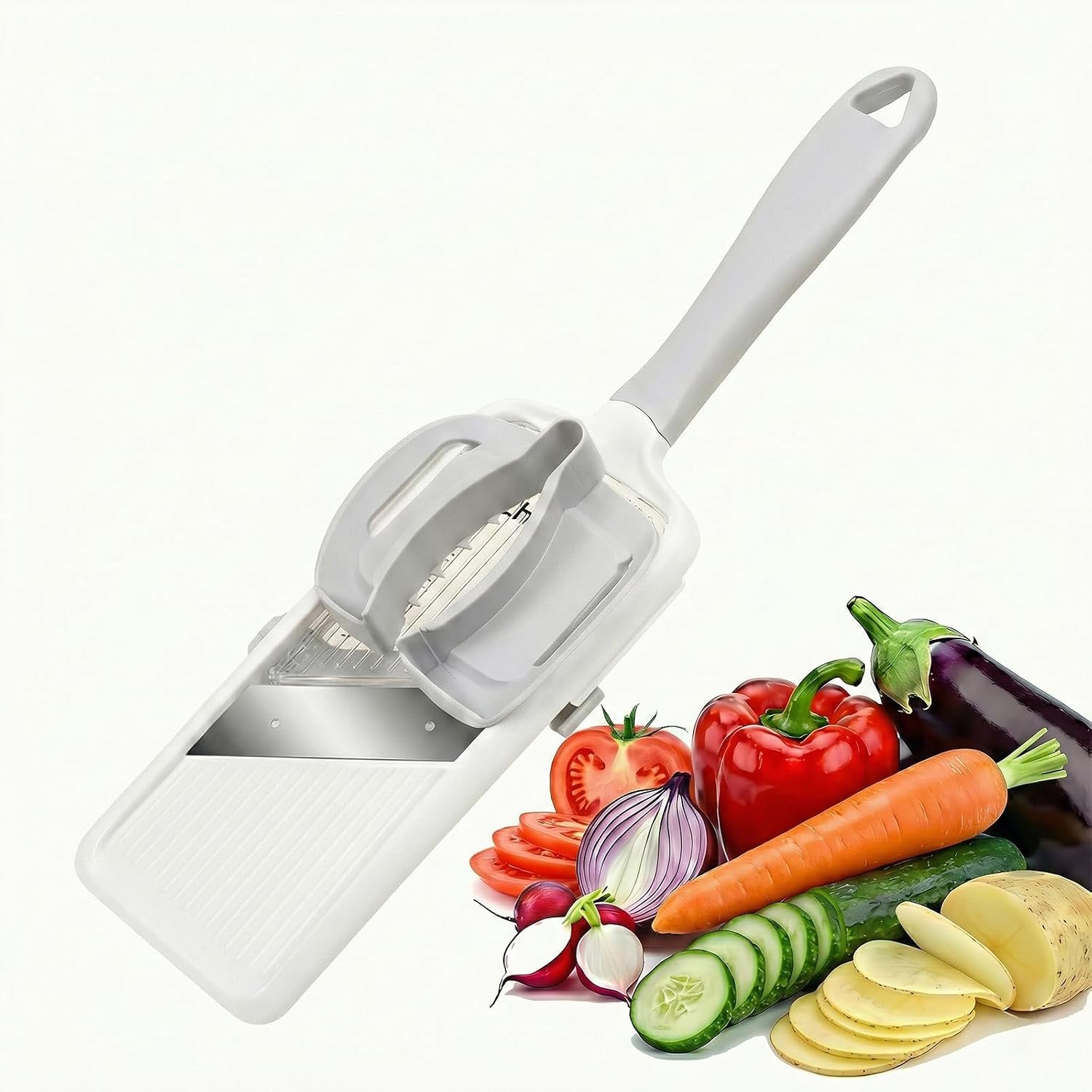
    The Upgrade Handheld Mandoline Slicer for Kitchen described in this guide is designed with adjustable three-thickness settings, a longer ergonomic grip, and a larger safety handle. The design focuses on controlled handheld slicing while keeping the tool relatively compact and easy to store.

    Its intended use is primarily centered on vegetables and fruits, making it a practical addition to a kitchen preparation routine. At the same time, mandoline slicers contain sharp cutting surfaces, so safe handling is essential. The safety features can assist with control, but they do not eliminate the need for careful technique.

    This article explains how a handheld mandoline slicer works, what its adjustable thickness settings can offer, how it can be used with different ingredients, what users should consider before choosing one, and how it compares with knives, box graters, and larger mandoline slicers.

    What Is a Handheld Mandoline Slicer?

    A mandoline slicer is a kitchen preparation tool designed to cut ingredients into slices of relatively consistent thickness.

    Traditional mandolines usually consist of a flat platform, a cutting blade, and some type of food holder or hand guard. The ingredient is moved across the blade, producing slices as it travels.

    A handheld mandoline follows the same basic principle in a more compact format.

    Rather than placing a large slicer on the countertop, the user holds the tool while guiding the ingredient across the cutting surface or blade.

    This design can make the tool easier to store and convenient for smaller preparation jobs.

    The tradeoff is that handheld operation requires good control. The user needs to maintain a secure grip on the tool and use the appropriate safety technique throughout the slicing process.

    Key Features

    The product described in this article incorporates several features intended to make handheld slicing more manageable.

    Three Adjustable Thickness Settings

    One of the main features is the ability to adjust the slicing thickness across three settings.

    Thickness can significantly change the way an ingredient behaves in a recipe.

    Thin slices may work well for salads, sandwiches, garnishes, and quick-cooking preparations. Medium slices can provide more structure, while thicker slices may be appropriate for roasting or other dishes where the ingredient needs to retain more substance.

    Having multiple settings means the same tool can be adapted to different recipes instead of producing only one fixed thickness.

    The exact thickness associated with each setting should be confirmed through the manufacturer’s specifications and adjustment markings.

    Longer Ergonomic Grip

    The slicer is described as having a longer comfort-oriented ergonomic grip.

    Handle design matters with handheld kitchen tools because users need to maintain control while applying consistent movement.

    A longer grip can provide more room for the hand and may be easier to hold during repetitive slicing.

    Ergonomic design does not guarantee that every user will find the handle equally comfortable. Hand size, grip preference, and the quantity of food being prepared can all influence comfort.

    Bigger Safety Handle

    The product also features a larger safety handle.

    A safety handle or food holder is intended to help keep the user’s hand farther away from the cutting blade while the ingredient is being sliced.

    This is an important feature for mandoline-style tools because the blade is sharp by design.

    However, the safety handle should not be treated as an absolute guarantee against injury. Users should follow the manufacturer’s instructions and maintain careful control throughout the process.

    Compact Handheld Format

    Unlike a large countertop mandoline, a handheld slicer can occupy relatively little storage space.

    This can be convenient for kitchens with limited cabinets or drawers.

    It can also be easier to bring out for a small preparation task without setting up a larger appliance or multi-part slicer.

    Easy-to-Clean Design

    The product is described as easy to clean.

    Kitchen slicers can collect small food particles around their blades and structural components, so cleaning is an important part of routine use.

    The exact cleaning method should follow the manufacturer’s instructions.

    Because the cutting edge is sharp, users should exercise particular care when washing the tool.

    Why Consistent Slicing Matters

    Uniform slicing is not only an aesthetic concern.

    The thickness of a food item can influence cooking time and texture.

    If potato slices vary significantly in thickness, thinner pieces may cook faster than thicker ones.

    The same principle applies to many vegetables used for roasting, frying, baking, or sautéing.

    Consistent slices can therefore help create more predictable results.

    For raw preparations such as salads, uniform pieces can also create a more consistent bite.

    A mandoline can help achieve this consistency more quickly than manually cutting every piece with a knife.

    How It Can Be Used

    A handheld mandoline slicer can be used for a broad range of vegetables and fruits.

    Slicing Cucumbers

    Cucumbers are a common application for mandoline slicers.

    Thin cucumber slices can be used in salads, sandwiches, wraps, pickled preparations, and garnishes.

    The adjustable thickness settings make it possible to choose between delicate thin slices and thicker pieces.

    Because cucumbers contain a significant amount of water, the cutting surface should be cleaned after use.

    Preparing Potatoes

    Potatoes can be sliced for numerous recipes.

    Thin slices may be useful for homemade chips or layered dishes, while thicker slices can work for roasting or other preparations.

    When using a mandoline with potatoes, the ingredient should be held securely and moved in a controlled direction.

    The final cooking method should determine the appropriate thickness.

    Slicing Carrots

    Carrots can be difficult to slice consistently with a knife, particularly when preparing large quantities.

    A mandoline can create relatively uniform rounds or slices.

    These can be added to salads, soups, stir-fries, vegetable trays, or roasted dishes.

    Preparing Zucchini

    Zucchini can be sliced into thin or medium pieces for grilling, roasting, casseroles, or vegetable dishes.

    The adjustable thickness can help match the slices to different recipes.

    Slicing Onions

    Onions can also be prepared using a mandoline.

    Thin onion slices can be useful for salads, sandwiches, burgers, pickled preparations, and cooking.

    The blade should be kept clean after use because onion residue can remain around the cutting area.

    Slicing Radishes

    Radishes are another useful application.

    Thin radish slices can be used for salads, sandwiches, tacos, garnishes, and vegetable platters.

    The consistent thickness produced by a mandoline can create a uniform presentation.

    Preparing Apples

    Firm apples can sometimes be sliced using a mandoline, depending on their size and firmness.

    Apple slices can be used for salads, snacks, desserts, or baking.

    Soft or overly ripe fruit may not slice as cleanly and may be more difficult to control.

    Slicing Pears

    Firm pears can also be suitable for slicing.

    As with apples, the fruit should be stable and firm enough to move safely across the cutting surface.

    Preparing Tomatoes

    Tomatoes can be sliced for sandwiches, salads, burgers, and other dishes.

    Firm tomatoes are generally easier to control than very soft or overripe ones.

    Because tomatoes contain substantial moisture, cleaning afterward is important.

    Choosing the Right Thickness

    The ability to adjust thickness is one of the most useful features of a mandoline.

    Different foods and recipes call for different slice dimensions.

    Thin Slices

    Thin slices can be useful when ingredients need to cook quickly or when a delicate texture is desired.

    Examples include:

    • Cucumber for salads
    • Radish for garnishes
    • Onion for sandwiches
    • Potato for chips
    • Apple for certain desserts

    Thin slicing can also make ingredients visually appealing.

    Medium Slices

    Medium thickness can be useful for everyday cooking.

    Vegetables such as zucchini, carrots, potatoes, and onions can be sliced at a medium setting for roasting, sautéing, or casseroles.

    Thicker Slices

    Thicker cuts can retain more structure.

    They may be appropriate for roasting vegetables, preparing substantial sandwich fillings, or creating larger pieces for certain recipes.

    The correct thickness ultimately depends on the cooking method and desired texture.

    Who It May Be Suitable For

    A handheld mandoline slicer can fit several kitchen routines.

    Home Cooks

    People who regularly prepare fresh vegetables can use a mandoline to speed up repetitive slicing tasks.

    Salad Preparation

    Anyone who frequently prepares salads may appreciate consistent cucumber, carrot, radish, onion, or other vegetable slices.

    Meal Preppers

    Meal preparation often involves cutting large quantities of ingredients.

    A mandoline can help create uniform pieces for multiple meals.

    Small Kitchens

    The compact handheld design can be useful where storage space is limited.

    It does not require the same countertop footprint as a large food processor or full-size mandoline setup.

    Beginners

    A mandoline can introduce users to consistent slicing without requiring advanced knife skills.

    However, beginners should spend time learning safe handling techniques before attempting to work quickly.

    Experienced Cooks

    Experienced cooks can also benefit from a mandoline when a recipe requires many uniform slices.

    The tool can complement, rather than replace, a chef’s knife.

    Important Things to Consider

    A mandoline slicer has a sharp blade, so safety should be a central consideration.

    The Blade Is Sharp

    The cutting edge is designed to slice food efficiently.

    That same sharpness creates an injury risk if the user’s fingers come into contact with it.

    Always use the provided safety handle or guard according to the manufacturer’s instructions.

    Do Not Rush

    Speed should not be the primary goal.

    Controlled movements are generally preferable to fast, forceful strokes.

    As the ingredient becomes smaller, extra caution is needed.

    Secure the Ingredient

    Ingredients should be positioned securely before slicing.

    Round foods can be more difficult to control than flat or stable vegetables.

    If an ingredient becomes too small to hold safely with the provided guard, it may be better to stop slicing rather than attempting to cut the final piece by hand against the blade.

    Check the Thickness Setting

    Make sure the desired setting is properly adjusted before beginning.

    Changing the setting while the tool is in use may create unnecessary risk.

    Keep Hands Away From the Blade

    The safety handle is there for a reason.

    Keep fingers away from the cutting edge and do not attempt to guide food directly with bare fingertips.

    Clean Carefully

    Mandoline blades require special attention during cleaning.

    Do not casually reach into the blade area with a sponge.

    Follow the manufacturer’s recommended cleaning procedure.

    Cleaning a Handheld Mandoline

    Cleaning is an important part of using any kitchen slicer.

    Food particles can remain around the blade, adjustment mechanism, or frame.

    Clean Soon After Use

    Food residue is often easier to remove before it dries.

    After finishing preparation, clean the slicer according to the manufacturer’s instructions.

    Handle the Blade Carefully

    Never assume that a blade is harmless simply because the slicer is not being used.

    Treat the cutting edge as sharp during washing, drying, and storage.

    Pay Attention to Small Areas

    Vegetable fibers and small pieces can collect around corners and the cutting opening.

    Inspect the tool carefully during cleaning.

    Dry Before Storage

    Allow the slicer to dry appropriately before putting it away.

    This can help maintain a cleaner storage environment.

    Handheld Mandoline vs. Chef’s Knife

    A chef’s knife is one of the most versatile kitchen tools available.

    It can chop, slice, dice, mince, and perform many other tasks.

    With practice, a skilled cook can produce highly consistent slices.

    The advantage of a mandoline is repeatability.

    Once the thickness is adjusted, the tool is designed to produce slices that are broadly similar in size.

    The tradeoff is flexibility.

    A knife can create many different cuts and shapes, while a mandoline is more specialized.

    A kitchen does not necessarily need to choose one or the other.

    A knife can handle irregular cuts and small preparation tasks, while a mandoline can handle repetitive slicing.

    Handheld Mandoline vs. Box Grater

    A box grater is designed primarily for grating and shredding.

    Many models also include a slicing surface, but their primary function is different from that of a dedicated mandoline.

    A mandoline is generally designed around controlled slicing and adjustable thickness.

    A box grater may be more versatile for cheese, vegetables, and shredding tasks.

    The appropriate tool depends on the preparation required.

    Handheld Mandoline vs. Food Processor

    Food processors can perform many preparation tasks, including slicing, shredding, chopping, and mixing.

    They can be particularly useful when processing large quantities.

    However, they require more components, electricity, setup, and cleanup.

    A handheld mandoline is simpler for small slicing tasks.

    For one cucumber or a few potatoes, a compact slicer may be more convenient than assembling a food processor.

    For large quantities, a food processor may provide greater efficiency.

    Handheld Mandoline vs. Large Countertop Mandoline

    A full-size countertop mandoline can provide a stable platform and may include additional cutting options.

    Its larger size can make it suitable for substantial preparation tasks.

    The downside is storage.

    A handheld mandoline is more compact and can be easier to store in a drawer or cabinet.

    The tradeoff is that handheld operation requires the user to maintain control throughout slicing.

    Improving Slicing Consistency

    A few simple habits can help users get more consistent results.

    Choose Firm Ingredients

    Firm vegetables are generally easier to control than soft or overripe ones.

    Cucumbers, carrots, potatoes, radishes, and firm apples are examples of ingredients that can work well.

    Cut Ingredients to a Manageable Shape

    Very large vegetables may be difficult to control.

    Cutting them into a suitable size before using the mandoline can improve stability.

    Keep the Motion Consistent

    Use a steady back-and-forth movement according to the tool’s design.

    Avoid sudden changes in direction.

    Apply Appropriate Pressure

    Excessive force is usually unnecessary.

    Let the blade perform the cutting while maintaining control over the ingredient.

    Use the Same Setting for a Batch

    If a recipe requires uniform slices, prepare the entire batch at the same thickness before changing the adjustment.

    Foods That May Be More Challenging

    Not every ingredient is equally suitable for a handheld mandoline.

    Very soft fruits can collapse or deform under pressure.

    Extremely hard foods may require significant force and should only be used if the manufacturer indicates they are appropriate.

    Irregularly shaped ingredients can also be difficult to control.

    Small ingredients become particularly challenging near the end of the slicing process.

    The safest approach is to follow the manufacturer’s recommended food types and use the safety holder throughout the process.

    Food Preparation and Meal Planning

    A mandoline can be useful beyond individual recipes.

    Meal preparation often involves cutting several vegetables in advance.

    For example, carrots, cucumbers, onions, and zucchini can be prepared and stored for use throughout the week, subject to appropriate food-storage practices.

    Consistent slices can also make portioning and cooking more predictable.

    When preparing ingredients in advance, remember that cut produce may have different storage requirements from whole produce.

    Use appropriate containers and refrigeration practices for perishable foods.

    Presentation and Garnishing

    Consistent slices can also improve food presentation.

    Thin cucumber or radish slices can be arranged on salads.

    Apple or pear slices can be used to decorate desserts or cheese boards.

    Vegetable slices can add visual variety to sandwiches and wraps.

    The mandoline does not replace culinary creativity, but it can make certain decorative cuts easier to reproduce.

    Safe Storage

    A mandoline should be stored carefully because its blade remains sharp even when the tool is not being used.

    If the product includes a protective cover or storage feature, use it according to the manufacturer’s instructions.

    Store the slicer somewhere where children cannot easily access it.

    Avoid placing loose sharp tools in a drawer where they can be grabbed accidentally.

    If the blade is exposed, position the tool so the cutting edge is protected from unnecessary contact.

    Caring for the Blade

    A mandoline’s performance depends heavily on the condition of its cutting edge.

    Avoid using the blade for ingredients outside its intended purpose.

    Do not attempt to sharpen or modify the blade unless the manufacturer specifically provides instructions for doing so.

    If the blade becomes damaged, loose, or otherwise unsafe, discontinue use until the issue is addressed appropriately.

    Common Mistakes to Avoid

    Using Bare Hands Near the Blade

    This is one of the most important mistakes to avoid.

    Always use the safety holder or guard.

    Slicing Too Quickly

    Fast movements can reduce control.

    A consistent, controlled rhythm is generally preferable.

    Continuing With a Tiny Piece

    Once the ingredient becomes too small for safe handling, stop.

    Do not sacrifice safety simply to use every last piece.

    Ignoring the Cleaning Instructions

    Sharp blades require careful cleaning.

    Follow the manufacturer’s recommendations.

    Forcing Hard Ingredients

    If an ingredient does not move smoothly through the slicer, do not force it.

    Check whether the food is appropriate for the tool and whether the thickness setting is suitable.

    Leaving the Tool Loose in a Drawer

    A sharp mandoline should be stored deliberately.

    Protect the blade and keep the tool away from children.

    Frequently Asked Questions

    What is a handheld mandoline slicer?

    A handheld mandoline slicer is a compact kitchen tool designed to cut vegetables and fruits into relatively uniform slices using an integrated sharp blade.

    How many thickness settings does this model have?

    The product is described as offering three adjustable slicing thicknesses.

    Why are adjustable thickness settings useful?

    Different recipes require different slice sizes. Adjustable settings allow users to select a thinner, medium, or thicker cut depending on the food and cooking method.

    Can the slicer be used for vegetables?

    Yes. Vegetables are one of the primary applications for a mandoline slicer. Common examples include cucumbers, potatoes, carrots, zucchini, onions, and radishes.

    Can it be used for fruit?

    The product is intended for vegetables and fruits. Firm fruits such as apples and pears may be suitable, while very soft or overripe fruit can be more difficult to control.

    Does a mandoline produce perfectly identical slices?

    A mandoline is designed to produce relatively consistent slices, but results depend on the ingredient, technique, pressure, and tool settings.

    Is the blade sharp?

    A mandoline slicer relies on a sharp cutting edge to slice food. Users should treat the blade as a serious cutting hazard and follow the provided safety instructions.

    What is the larger safety handle for?

    The safety handle is intended to help users maintain control of the food while keeping their fingers farther away from the cutting blade.

    Should the safety handle always be used?

    Yes. Users should follow the manufacturer’s instructions and use the supplied safety features as intended.

    Is the longer ergonomic grip useful?

    A longer grip can provide additional hand space and may make the tool more comfortable for some users during repetitive slicing. Comfort varies from person to person.

    Can beginners use a handheld mandoline?

    Beginners can use a handheld mandoline, but they should first become familiar with the tool and its safety instructions. Controlled movement is more important than speed.

    Can a mandoline replace a chef’s knife?

    No. A mandoline and chef’s knife serve different purposes. A knife offers much greater flexibility, while a mandoline is particularly useful for repeated, consistent slicing.

    Is a handheld mandoline easier to store?

    Its compact format can make storage easier than larger countertop mandolines or food processors.

    Can it slice potatoes?

    Firm potatoes are commonly sliced with mandoline-style tools. The appropriate thickness depends on the intended recipe.

    Can it slice cucumbers?

    Yes. Cucumbers are a common use for mandoline slicers and can be prepared at different thicknesses.

    Can it slice onions?

    Yes. Firm onions can be sliced using a mandoline, provided they are securely held and the safety handle is used.

    Can it slice tomatoes?

    Firm tomatoes can often be sliced with mandoline-style tools, although very soft tomatoes may be more difficult to control.

    Can it slice carrots?

    Yes. Carrots can be sliced into relatively consistent pieces for salads, soups, roasting, and other dishes.

    Can it slice apples?

    Firm apples may be suitable for slicing, depending on their size and the manufacturer’s recommendations.

    Is the mandoline dishwasher safe?

    Dishwasher compatibility should be confirmed through the manufacturer’s instructions. Users should not assume that every mandoline or blade assembly is dishwasher safe.

    How should the blade be cleaned?

    Clean it according to the manufacturer’s instructions while treating the blade as sharp throughout the process. Avoid placing fingers directly against the cutting edge.

    How should the slicer be stored?

    Store it in a clean, dry location where the blade is protected and children cannot access it.

    What should I do when the vegetable becomes too small?

    Stop slicing when the remaining piece can no longer be held safely with the supplied safety mechanism. Do not attempt to finish the last portion with bare fingers near the blade.

    Can the slicer be used for large quantities?

    It can handle repeated slicing tasks, but the practical quantity depends on the user’s comfort, ingredient type, and preparation routine. A food processor may be more appropriate for very large batches.

    What ingredients are difficult to slice with a mandoline?

    Very soft, overripe, irregularly shaped, or extremely hard ingredients can be more challenging. Follow the manufacturer’s recommendations for suitable foods.

    Why do slice thicknesses matter when cooking?

    Thickness affects cooking time, texture, and presentation. Uniform slices can help ingredients cook more evenly.

    Is a mandoline useful for meal preparation?

    Yes. It can help prepare consistent slices of vegetables and fruits for salads, sandwiches, roasting, cooking, and other meals.

    What is the main thing to remember when using a mandoline?

    Safety should come before speed. Keep fingers away from the blade, use the safety holder, maintain controlled movements, and stop when an ingredient becomes too small to handle safely.

    Conclusion

    A handheld mandoline slicer is designed to simplify one of the most repetitive tasks in food preparation: creating relatively uniform slices of vegetables and fruits.

    The Upgrade Handheld Mandoline Slicer described in this guide combines three adjustable thickness settings with a longer ergonomic grip and a larger safety handle. Together, these features are intended to make the slicing process more adaptable and controlled while maintaining a compact form that can be convenient for everyday kitchen storage.

    The adjustable thickness system is particularly useful because different recipes call for different types of slices. Thin cucumber or radish slices can work well in salads and garnishes, medium vegetable slices can be useful for everyday cooking, and thicker pieces may be suitable for roasting or other preparations.

    The tool can also save repetitive knife work when preparing larger quantities of firm vegetables such as potatoes, carrots, zucchini, onions, and cucumbers. Firm fruits such as apples and pears may also be suitable for certain slicing tasks.

    However, the most important consideration with any mandoline is safety. The cutting blade is intentionally sharp, and even a tool with a larger safety handle requires careful handling. Users should keep their fingers away from the blade, use the supplied safety mechanism, avoid rushing, and stop when an ingredient becomes too small to handle safely.

    Cleaning and storage deserve equal attention. Food particles should be removed after use, the blade should be handled carefully during cleaning, and the slicer should be stored where the sharp cutting edge cannot cause accidental injury.

    Compared with a chef’s knife, a handheld mandoline is more specialized but can provide greater consistency for repeated slicing. Compared with a food processor or large countertop mandoline, it can offer a more compact and straightforward solution for smaller preparation tasks. These tools can complement one another rather than serving as direct replacements.

    Ultimately, a handheld mandoline can be a practical addition to a kitchen for people who frequently prepare sliced vegetables and fruits and want a convenient way to achieve more consistent thickness. Its value depends on using the appropriate foods, selecting a suitable thickness, maintaining good technique, and treating the blade with the respect required of any sharp kitchen tool.

    You can check more details on Amazon here.

  • 2-in-1 Cutting Boards: A Practical Guide to Stainless Steel and Wheat Straw Kitchen Boards

    2-in-1 Cutting Boards: A Practical Guide to Stainless Steel and Wheat Straw Kitchen Boards

    A cutting board is one of the most frequently used tools in a kitchen. Whether someone is preparing vegetables for a quick lunch, slicing fruit for breakfast, trimming meat for dinner, or chopping herbs for a recipe, the cutting board provides the working surface between the food and the countertop.

    Choosing a cutting board, however, involves more than simply looking at its size or appearance. Material, cleaning requirements, food preparation habits, durability, storage, and cross-contamination concerns can all influence which type of board is appropriate for a particular kitchen.

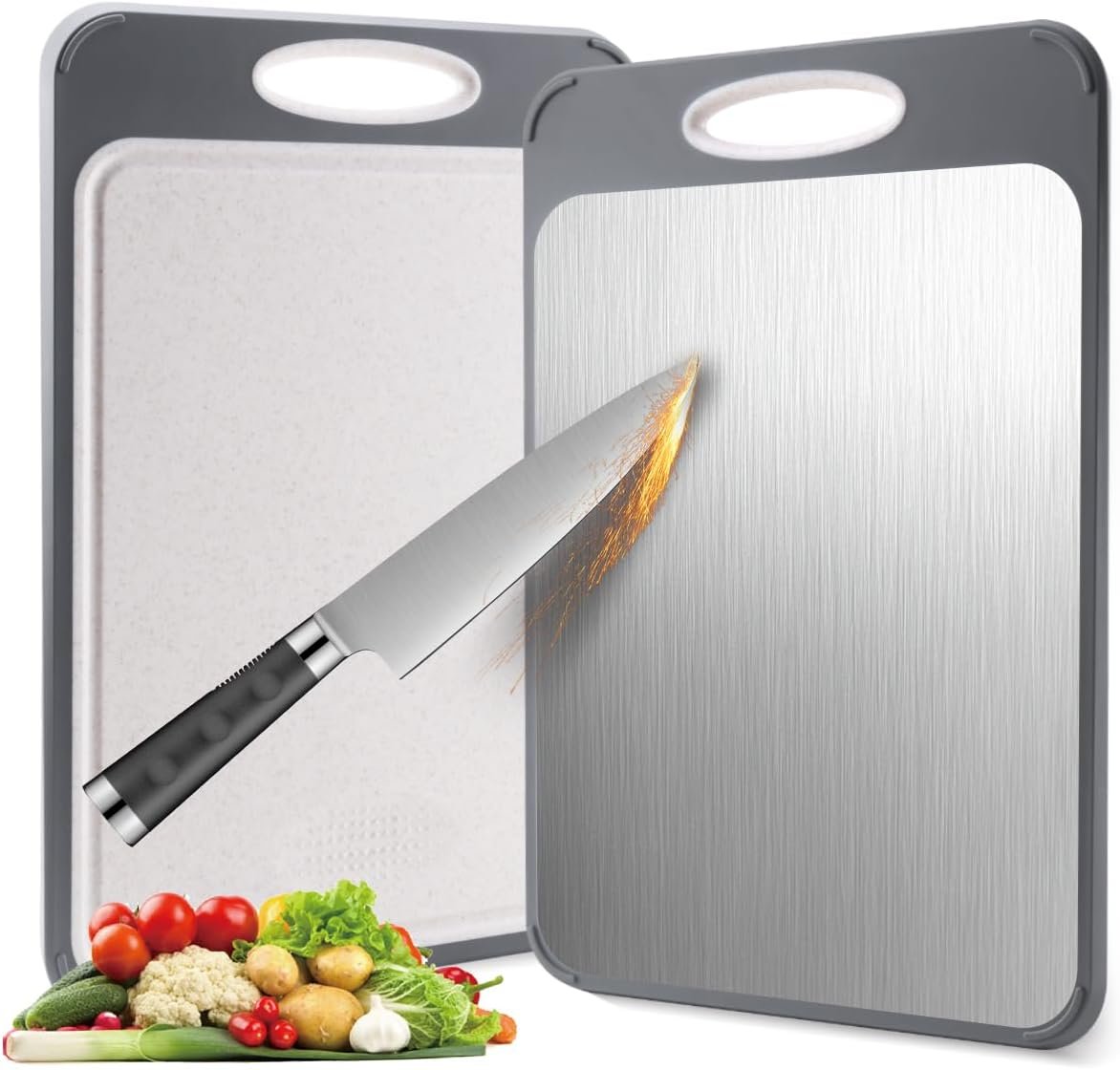
    The 2-in-1 Cutting Boards product discussed in this article uses a double-sided design combining 304 stainless steel and food-grade wheat straw. The concept gives users access to two different preparation surfaces within one kitchen accessory. It is also described with an easy-clean design and a juice groove intended to help manage liquid released by certain foods.

    Having two distinct surfaces can be useful for households that want to separate certain food-preparation tasks or simply prefer different surfaces for different ingredients. Stainless steel offers a firm, non-porous working surface, while a wheat straw-based food-contact surface provides a different texture and feel for everyday chopping.

    As with any cutting board, proper cleaning and food-handling habits remain important. A cutting board should not be considered automatically hygienic simply because of its material. The way it is used, cleaned, dried, and stored plays a significant role in maintaining a suitable food-preparation environment.

    This guide examines the design and practical uses of a 2-in-1 cutting board, explains the differences between stainless steel and plant-based board materials, discusses the purpose of a juice groove, and compares this type of product with other common cutting-board categories.

    What Is a 2-in-1 Cutting Board?

    A 2-in-1 cutting board combines two preparation surfaces into one product.

    Instead of having two completely separate boards, the user can access different materials on opposite sides of the same board.

    For this particular product, the two-sided design combines 304 stainless steel with food-grade wheat straw.

    The concept provides flexibility when preparing different types of food.

    For example, one side may be used for ingredients that benefit from a firm stainless-steel surface, while the other can be used for general chopping and preparation tasks.

    The two sides can also help create a more organized workflow.

    A cook may designate one surface for particular ingredients and the other for different preparation tasks. However, users should still clean the board thoroughly between uses when appropriate. Simply switching sides does not eliminate the need for proper sanitation.

    Key Features

    Several features define the practical design of this cutting board.

    304 Stainless Steel Surface

    304 stainless steel is a commonly used stainless-steel grade across food-service and kitchen applications.

    A stainless-steel cutting surface provides a firm, non-porous material that does not absorb liquids in the same way as porous wood or some softer board materials.

    This can be useful when preparing ingredients that release moisture.

    Stainless steel is also generally straightforward to wipe and clean.

    However, stainless steel has a very hard surface, which means it can interact differently with kitchen knives than softer cutting boards. Frequent cutting on a hard surface may contribute to knife-edge wear, depending on the knife and cutting technique.

    For this reason, users who place a high priority on maintaining very sharp knives may prefer to use the stainless-steel side selectively.

    Food-Grade Wheat Straw Surface

    The second side is described as being made from food-grade wheat straw.

    Wheat straw is a plant-based material that is used in various household products.

    A wheat-straw-based cutting surface can provide a different feel from stainless steel and may be suitable for everyday chopping tasks.

    The term “food grade” indicates that the material is intended for contact with food under its specified conditions.

    As with any food-contact surface, users should follow the manufacturer’s cleaning and care instructions.

    Double-Sided Design

    The double-sided construction is one of the most practical characteristics of the product.

    Instead of storing two completely separate cutting boards, users have access to two surfaces in one design.

    This can save storage space and simplify kitchen organization.

    It can also make it easier to select a preferred working surface depending on the ingredient being prepared.

    Juice Groove

    The cutting board includes a juice groove designed to help contain liquids released during food preparation.

    Foods such as tomatoes, citrus fruits, watermelon, cooked meat, and other moist ingredients can release liquid when cut.

    Without a groove, this liquid can spread toward the edge of the board and eventually reach the countertop.

    A juice groove provides a channel around the working area where some of this liquid can collect.

    It does not guarantee that all liquid will remain contained, particularly when a large amount of juice is produced.

    Easy-Clean Design

    The product is described as easy to clean.

    A smooth stainless-steel surface can generally be wiped down after use, while the other surface requires cleaning according to its material and manufacturer’s instructions.

    Ease of cleaning is an important consideration for a cutting board because food residue should not be allowed to remain on the surface between uses.

    Kitchen-Focused Design

    The product is intended for food preparation and is suitable for a range of common kitchen tasks.

    Its two materials can make it more adaptable than a single-material board, although the appropriate side depends on the food and preparation method.

    Understanding 304 Stainless Steel

    304 stainless steel is a widely used stainless-steel grade.

    It contains chromium and nickel as major alloying elements and is valued for corrosion resistance and general durability.

    In kitchen environments, stainless steel is used in cookware, utensils, appliances, food-service equipment, and preparation surfaces.

    For a cutting board, the material’s non-porous nature is particularly relevant.

    Liquid does not soak into stainless steel in the same way it can enter porous materials.

    This can make surface cleaning straightforward.

    At the same time, stainless steel is a relatively hard cutting surface.

    Knives are designed to interact with cutting boards in a way that preserves their edges. Very hard surfaces can be less forgiving to knife edges than materials specifically designed around knife-friendly cutting.

    Therefore, the stainless-steel side can be viewed as a useful specialty surface rather than necessarily the only surface a cook should use for every cutting task.

    Understanding Wheat Straw Cutting Boards

    Wheat straw is an agricultural plant material that can be incorporated into certain consumer products.

    When used in a food-contact product, the material is processed and formed into a suitable shape.

    A wheat-straw cutting surface provides a different tactile experience from metal.

    It can be more forgiving to knives than a very hard stainless-steel surface, depending on its specific construction.

    The actual characteristics of the board depend on how the wheat straw material has been processed and combined.

    Users should therefore follow the manufacturer’s recommendations regarding cutting, cleaning, heat exposure, dishwasher use, and storage.

    How It Can Be Used

    A 2-in-1 cutting board can support many everyday kitchen tasks.

    Chopping Vegetables

    Vegetable preparation is one of the most common cutting-board applications.

    Carrots, onions, peppers, zucchini, potatoes, cucumbers, and other vegetables can be chopped on a suitable surface.

    The wheat straw side may be convenient for general chopping, while the stainless-steel side can provide a firm surface when desired.

    After preparing vegetables, the board should be cleaned appropriately before being used for another food category.

    Slicing Fruit

    Fruit can release significant amounts of juice.

    Watermelon, oranges, lemons, limes, strawberries, peaches, tomatoes, and other produce can create moisture while being cut.

    The juice groove can help collect some of this liquid.

    The groove can be particularly useful when cutting larger or particularly juicy ingredients.

    Preparing Meat

    A cutting board can be used for raw meat preparation when the surface is appropriate and the board is cleaned thoroughly afterward.

    The stainless-steel surface provides a non-porous preparation area, which can be useful for ingredients that release liquid.

    However, raw meat handling requires careful food-safety practices.

    After preparing raw meat, the board should be cleaned and sanitized appropriately before being used for ready-to-eat foods.

    If possible, many kitchens benefit from maintaining separate boards for raw animal products and ready-to-eat foods.

    Cutting Poultry

    Chicken and other poultry should be handled carefully because raw poultry can carry harmful microorganisms.

    A dedicated cutting surface can help establish separation between raw poultry and other ingredients.

    The board should be cleaned thoroughly after use, and users should wash their hands and any tools that have contacted raw poultry.

    Chopping Herbs

    Fresh herbs such as parsley, cilantro, basil, mint, and rosemary can be prepared on a cutting board.

    For fine chopping, a surface that feels stable under the knife can make the process more controlled.

    The board should be cleared of small herb fragments after preparation.

    Preparing Cheese

    Cheese can be sliced or portioned on a cutting board.

    Different cheeses can leave oils or residue behind, making thorough cleaning important if the board will later be used for fresh produce or other foods.

    Preparing Sandwich Ingredients

    A cutting board can also function as a general food-preparation station.

    Tomatoes, lettuce, onions, cheese, bread, and other sandwich ingredients can be prepared on an appropriate surface.

    The board can help keep preparation organized and prevent direct contact between knives and the countertop.

    Using the Juice Groove Effectively

    A juice groove can be useful, but understanding its limitations is important.

    The groove is typically positioned around part of the perimeter of the cutting surface.

    When cutting juicy foods, liquid can flow toward the groove rather than immediately reaching the edge of the board.

    Foods That Can Benefit From a Groove

    Some examples include:

    • Tomatoes
    • Watermelon
    • Citrus fruits
    • Pineapple
    • Cucumbers
    • Cooked meats
    • Certain marinated foods

    The effectiveness depends on the amount of liquid released and how the food is positioned.

    Avoid Overfilling the Groove

    A groove has limited capacity.

    If a food produces more liquid than the channel can hold, the liquid may eventually overflow.

    For especially juicy ingredients, emptying the groove and wiping the board may be necessary during preparation.

    Clean the Groove Thoroughly

    Small food particles and liquids can collect inside the groove.

    When cleaning the board, pay attention to the entire channel rather than only the flat cutting surface.

    This helps prevent residue from remaining in hard-to-see areas.

    Creating Separate Food-Preparation Zones

    One potential benefit of a double-sided cutting board is that it encourages a more organized workflow.

    Users can establish informal rules for how each side is used.

    For example, one side could be primarily used for vegetables and fruit, while the other is reserved for foods that produce more moisture.

    However, this does not eliminate the need for cleaning.

    Food-safety practices should always take priority over convenience.

    If raw meat is prepared on one side, the board should be thoroughly cleaned and sanitized before being used for foods that will not be cooked.

    For households that frequently prepare raw meat and ready-to-eat foods, separate dedicated cutting boards can still provide a clearer system for preventing cross-contamination.

    Who It May Be Suitable For

    A dual-material cutting board can be useful for several types of kitchens.

    Home Cooks

    People who prepare meals regularly can use a cutting board for a wide range of ingredients.

    Having two surfaces available in one product can provide additional flexibility.

    Small Kitchens

    Storage space can be a major consideration in compact kitchens.

    Instead of storing two separate cutting boards, a two-sided design provides two working surfaces within one item.

    Apartment Kitchens

    Apartments often have limited cabinet and countertop space.

    A compact multi-purpose kitchen tool can help reduce clutter.

    Meal Preparers

    People who prepare several ingredients in advance may appreciate having a dedicated preparation surface.

    The board can be used for vegetables, fruit, proteins, herbs, and other ingredients as part of an organized workflow.

    People Who Prepare Juicy Foods

    Anyone who frequently cuts tomatoes, watermelon, citrus fruits, or other moist ingredients may find a juice groove useful.

    Gift Shoppers

    A practical cutting board can also be appropriate as a kitchen-oriented gift for someone who enjoys cooking.

    Important Things to Consider

    A cutting board is a relatively simple kitchen product, but several details matter when deciding how to use one.

    Knife Compatibility

    Stainless steel is harder than many conventional cutting-board materials.

    While this provides a firm and non-porous surface, it can be less forgiving to knife edges.

    Users who regularly maintain high-end or finely sharpened knives may want to reserve the stainless-steel side for tasks where its characteristics are useful.

    The wheat straw side may be more appropriate for routine chopping if its construction is designed for knife use.

    Cleaning Requirements

    Both surfaces should be cleaned after food preparation.

    Pay particular attention to the juice groove and any edges or seams where food particles may collect.

    The manufacturer’s cleaning instructions should be followed.

    Raw Meat and Cross-Contamination

    Using two sides does not automatically make a cutting board safe from cross-contamination.

    Raw meat, poultry, seafood, and ready-to-eat foods should be handled carefully.

    A thorough cleaning and sanitizing routine is important when the same board is used for different categories of food.

    Surface Stability

    A cutting board should remain stable while a knife is being used.

    Users should place it on a suitable countertop and ensure that the working surface is secure before chopping.

    If a board moves during cutting, a suitable non-slip mat or other approved stabilizing method may be useful if compatible with the product.

    Board Size

    The working area should be large enough for the foods commonly prepared.

    A board that is too small can cause ingredients to fall over the edge or make chopping uncomfortable.

    A larger board can provide more workspace but may require more storage space.

    Storage

    The board should be stored in a clean and dry location.

    Allow it to dry properly after cleaning before putting it away.

    Stainless Steel vs. Wood Cutting Boards

    Wooden cutting boards have long been used in kitchens.

    They provide a relatively knife-friendly cutting surface and are available in many sizes and designs.

    However, wood is porous compared with stainless steel and requires appropriate cleaning and drying.

    Stainless steel is non-porous and generally easy to wipe clean.

    Its harder surface can make it less forgiving for knife edges.

    A 2-in-1 board that includes stainless steel and a plant-based material gives users access to characteristics associated with both categories.

    The important distinction is that each side may be better suited to different tasks.

    Stainless Steel vs. Plastic Cutting Boards

    Plastic cutting boards are widely used because they are lightweight and available in many shapes and sizes.

    Many can also be cleaned easily.

    The surface can develop knife grooves over time, depending on the material and frequency of use.

    Stainless steel does not absorb liquids in the same way and has a highly durable surface.

    However, stainless steel’s hardness is a consideration for knife care.

    Plastic may therefore remain attractive for cooks who prioritize a softer knife surface, while stainless steel may appeal to those who value a firm, non-porous preparation surface.

    Wheat Straw vs. Traditional Wood

    Wheat straw and wood are both plant-derived materials, but they are not identical.

    Wood is a natural solid material with grain structure and different hardness characteristics depending on the species.

    Wheat straw products are made by processing agricultural plant fibers into a usable form.

    The feel, durability, and maintenance requirements can therefore differ.

    Users should not assume that a wheat straw board can be maintained exactly like a traditional hardwood cutting board.

    Following the product-specific care instructions is the safest approach.

    Two-Sided Cutting Board vs. Two Separate Boards

    A two-sided board provides two working surfaces within one product.

    This can save storage space and simplify kitchen organization.

    Two separate boards, however, provide greater physical separation.

    For example, one board can be permanently assigned to raw meat while another is used for vegetables and ready-to-eat foods.

    This can make food-safety organization easier.

    A dual-sided board can still be useful, but it should not be viewed as a complete substitute for separate boards when strict separation is preferred.

    Food-Safety Practices for Cutting Boards

    The material of a cutting board is only one part of food safety.

    Wash Hands Before Food Preparation

    Hands should be washed thoroughly before and after handling raw foods.

    Clean After Each Use

    Food residue should be removed after preparation.

    Sanitize When Appropriate

    After contact with raw meat, poultry, or seafood, appropriate cleaning and sanitizing procedures should be followed.

    Keep Raw and Ready-to-Eat Foods Separate

    Avoid transferring harmful microorganisms from raw ingredients to foods that will not be cooked.

    Dry the Board

    Moisture left on a board can contribute to an undesirable storage environment.

    Allow the board to dry thoroughly.

    Inspect the Surface

    Regularly check the cutting board for damage, deep grooves, cracks, or other changes that could make cleaning more difficult.

    If a surface becomes difficult to clean effectively, replacing the board may be appropriate.

    Maintaining a Stainless-Steel Cutting Surface

    Stainless steel is generally straightforward to maintain.

    After use, remove food residue and wash the surface using the recommended cleaning method.

    Avoid using cleaning products that are not appropriate for food-contact surfaces.

    Dry the board afterward if the manufacturer’s instructions recommend it.

    Stainless steel can also show water marks or fingerprints more readily than some other materials, but these are primarily cosmetic concerns.

    The more important issue is ensuring that food residue and moisture are removed appropriately.

    Maintaining a Wheat Straw Surface

    The wheat straw side should be maintained according to the manufacturer’s instructions.

    Some plant-based composite products may have specific restrictions concerning soaking, high temperatures, dishwasher use, or drying.

    Do not assume that every wheat straw product has the same maintenance requirements.

    After washing, allow the board to dry appropriately before storing it.

    Avoiding Common Cutting-Board Mistakes

    Using One Side Without Cleaning It

    The double-sided design provides flexibility, but switching between food types without cleaning can create cross-contamination risks.

    Ignoring the Juice Groove

    Food particles can collect in the groove.

    Clean it as thoroughly as the rest of the board.

    Cutting Extremely Hard Items Without Considering the Knife

    Some foods require significant force to cut.

    Using appropriate kitchen tools and cutting techniques can reduce unnecessary stress on the knife and board.

    Leaving the Board Wet

    After cleaning, allow the board to dry properly.

    Using Harsh Cleaners

    Only use cleaning products suitable for food-contact surfaces and compatible with the material.

    Assuming “Food Grade” Means Maintenance-Free

    Food-grade material still requires proper cleaning and handling.

    Choosing the Right Side for Different Foods

    The two surfaces can be treated as complementary tools.

    The stainless-steel side may be useful when a firm, non-porous surface is desired.

    The wheat straw side can serve as a general preparation surface for chopping and slicing.

    There is no universal rule that one side must always be used for one category of food.

    Instead, users can establish a routine based on their cooking style.

    For example, someone might use the wheat straw side for everyday vegetables and herbs while reserving the stainless-steel side for foods where moisture management and easy wiping are particularly useful.

    The important thing is consistency and proper cleaning.

    Using the Board for Meal Preparation

    Meal preparation often involves several ingredients.

    A cook may begin with vegetables, then prepare herbs, fruit, cheese, and a protein.

    A two-sided cutting board can provide flexibility throughout this process.

    However, food-safety sequencing matters.

    If raw meat is prepared after vegetables, the board should be cleaned appropriately before returning to ingredients that will be eaten without cooking.

    Alternatively, raw animal products can be prepared last to simplify cleanup.

    Planning the order of preparation can make kitchen work more efficient.

    Storage Tips

    A cutting board should have a designated storage location.

    For a double-sided product, protecting both surfaces is important.

    Avoid storing it directly against dirty or wet surfaces.

    If the board is stored vertically, make sure it is stable and has adequate ventilation.

    If stored horizontally, keep it in a clean cabinet or shelf where it will not be exposed to unnecessary moisture.

    Avoid placing heavy objects on top of the board if they could scratch, warp, or damage either surface.

    Frequently Asked Questions

    What is a 2-in-1 cutting board?

    A 2-in-1 cutting board provides two different food-preparation surfaces in one product. This design can provide greater flexibility while reducing the need to store two separate boards.

    What materials are used in this cutting board?

    The product is described as having a 304 stainless steel side and a food-grade wheat straw side.

    What is 304 stainless steel?

    304 is a commonly used stainless-steel grade known for corrosion resistance and use in many kitchen and food-service applications.

    What is wheat straw material?

    Wheat straw is a plant-based agricultural material that can be processed into products such as kitchen accessories. The specific characteristics depend on how the material is manufactured.

    What is the purpose of the juice groove?

    A juice groove provides a recessed channel around the cutting area designed to help collect liquids released by foods during cutting.

    Which foods can benefit from a juice groove?

    Juicy foods such as tomatoes, watermelon, citrus fruits, pineapple, cucumbers, and certain meats can release liquid that may collect in the groove.

    Does the juice groove contain all liquid?

    Not necessarily. A groove has limited capacity, and foods that release substantial amounts of liquid may eventually exceed it.

    Can the cutting board be used for meat?

    It can be used for food preparation, including meat, provided appropriate food-safety practices are followed. The board should be thoroughly cleaned and sanitized after raw meat preparation.

    Can raw meat and vegetables be prepared on the same board?

    They can be prepared on the same board only with proper cleaning and sanitizing between uses. For easier separation, many kitchens prefer dedicated boards for raw animal products and ready-to-eat foods.

    Is stainless steel good for knives?

    Stainless steel provides a firm, durable cutting surface, but it is harder than many traditional cutting-board materials and may contribute to knife-edge wear. Users concerned about knife preservation may prefer a softer cutting surface for routine chopping.

    Is the wheat straw side suitable for vegetables?

    The wheat straw side is designed as a food-preparation surface and can be used for common tasks such as chopping vegetables, subject to the manufacturer’s care instructions.

    Is this cutting board easy to clean?

    The product is described as easy to clean. The stainless-steel surface is generally straightforward to wipe and wash, while the wheat straw side should be cleaned according to its specific care instructions.

    Can it be placed in a dishwasher?

    Dishwasher compatibility depends on the manufacturer’s instructions for the specific product. Do not assume that both sides have identical dishwasher requirements.

    Does food-grade mean the board does not need to be cleaned?

    No. Food-grade materials are intended for appropriate food contact, but all cutting boards still require proper cleaning and maintenance.

    How should the juice groove be cleaned?

    Clean the groove as thoroughly as the flat cutting surface. Food particles and liquid can collect inside the channel.

    Is a two-sided board better than two separate boards?

    It depends on the kitchen. A two-sided board saves space and provides flexibility, while two separate boards can make strict separation between raw and ready-to-eat foods easier.

    Is stainless steel more hygienic than wood?

    Material alone does not determine kitchen hygiene. Proper cleaning, sanitizing, drying, and food-handling practices are essential regardless of the board material.

    Can the board be used for fruit?

    Yes. Fruit can be prepared on a suitable cutting surface. Juicy fruits can also make use of the juice groove.

    Can cheese be cut on the board?

    Yes. Cheese can be prepared on a cutting board, although the surface should be cleaned afterward before preparing other foods.

    Can herbs be chopped on it?

    Yes. Fresh herbs such as parsley, basil, cilantro, and rosemary can be chopped on an appropriate cutting surface.

    How should the board be stored?

    Store it in a clean, dry area after cleaning and drying. Vertical storage can save space if the board can be positioned securely.

    Does a two-sided design eliminate cross-contamination?

    No. Having two surfaces does not automatically prevent cross-contamination. Proper cleaning and separation of raw and ready-to-eat foods remain important.

    What should be checked before using the cutting board?

    Review the manufacturer’s instructions for cleaning, dishwasher use, temperature limitations, storage, and other material-specific care requirements.

    Conclusion

    A cutting board may be a simple kitchen accessory, but the material and design can have a noticeable effect on how food preparation fits into an everyday routine.

    The 2-in-1 cutting board described in this guide combines two distinct surfaces: 304 stainless steel and food-grade wheat straw. This double-sided arrangement provides users with more than one type of preparation surface while keeping both options within a single kitchen accessory.

    The stainless-steel side offers a firm, non-porous working surface that can be convenient for certain preparation tasks and straightforward cleaning. The wheat straw side provides an alternative surface for general chopping and slicing. The choice between the two can depend on the food being prepared, the user’s preferences, and knife-care priorities.

    The integrated juice groove adds another practical feature. It is designed to provide a place for liquid released by juicy foods such as tomatoes, citrus fruits, watermelon, and other ingredients. While it can help manage moisture, it should not be treated as a guarantee that all liquid will remain contained.

    The double-sided design can also provide storage benefits. Instead of keeping two separate boards in a cabinet, users have two preparation surfaces in one product. This can be especially useful in apartments, compact kitchens, and other spaces where storage is limited.

    At the same time, material choice does not replace good food-safety practices. Raw meat, poultry, and seafood should be handled separately from ready-to-eat foods whenever possible, and the board should be cleaned and sanitized appropriately between different food categories. Both surfaces, including the juice groove and edges, should receive proper attention during cleaning.

    Knife care is another consideration. Stainless steel is a very hard material, and its interaction with knife edges differs from softer cutting-board materials. Cooks who place a high priority on maintaining finely sharpened knives may choose to use the stainless-steel side selectively.

    Ultimately, the usefulness of a two-sided cutting board comes from its combination of flexibility, organization, and material variety. It can provide a practical workspace for everyday ingredients while reducing the need to store multiple separate boards.

    As with any food-preparation accessory, reviewing the manufacturer’s care instructions and using the board according to its intended purpose are important steps toward maintaining a clean and functional kitchen workspace.

    You can check more details on Amazon here.

  • Removable Handle Pots and Pans: A Practical Guide to a 10-Piece Nonstick Cookware Set

    Removable Handle Pots and Pans: A Practical Guide to a 10-Piece Nonstick Cookware Set

    Choosing cookware is about more than finding pots and pans that can prepare a meal. In a modern kitchen, storage space, cleaning, cooking flexibility, and the way different pieces work together can be just as important as the cooking surface itself.

    Traditional cookware usually has permanently attached handles. That familiar design works well for many kitchens, but long handles can make cabinets crowded, complicate stacking, and take up valuable space on small countertops. Removable-handle cookware takes a different approach. The handles can be attached when the cookware is being moved or used and detached when the pieces need to be stored, depending on the manufacturer’s instructions.

    The Removable Handle Pots and Pans 10-Piece Cookware Set discussed in this guide is designed around this space-conscious concept. The set combines multiple cookware pieces with a nonstick cooking surface and detachable handles. The product is also described as suitable for induction cooking, making compatibility an important consideration for households using modern induction cooktops.

    A cookware system like this can be particularly interesting for apartments, compact kitchens, RVs, vacation homes, or anyone who wants to organize several cookware pieces without dealing with a collection of permanently extended handles.

    At the same time, removable-handle cookware has its own considerations. A detachable handle is a mechanical component that needs to be attached correctly before lifting cookware. Nonstick surfaces also require appropriate care, including sensible heat management, compatible utensils, and suitable cleaning methods.

    This article explores the practical features of removable-handle pots and pans, explains how a 10-piece nonstick cookware set can fit into everyday cooking, compares it with other cookware categories, and covers the important factors to consider before incorporating this type of cookware into a kitchen.

    What Is Removable-Handle Cookware?

    Removable-handle cookware is designed so that the handle can be detached from the main body of a pot or pan.

    With traditional cookware, the handle remains permanently attached. This makes the pan immediately ready to lift and maneuver, but the handle also remains in place when the pan is being stored.

    A removable-handle design separates these two functions.

    When cooking, the handle can be attached according to the manufacturer’s instructions. After cooking, it can potentially be removed, allowing the cookware body to occupy less space in a cabinet or storage area.

    This design can be particularly useful when several pans need to be stacked or nested. Without a long handle extending from every piece, cookware can often be arranged more compactly.

    The concept is not necessarily about changing the fundamental way food is cooked. A frying pan with a detachable handle can still be used for many of the same meals as a conventional frying pan. The main difference is the way the cookware can be handled and stored.

    Key Features

    Several characteristics are particularly relevant when considering a 10-piece removable-handle cookware set.

    10-Piece Configuration

    The set is described as a 10-piece cookware collection.

    A multi-piece set can provide several cookware options within one coordinated system, making it possible to select different sizes for different cooking tasks.

    The exact pieces included in a set should always be confirmed through the current product listing and manufacturer information. Depending on the configuration, cookware sets can contain different combinations of frying pans, saucepans, pots, lids, handles, or other components.

    Having multiple pieces can be useful for households that prepare several parts of a meal at once.

    For example, a larger vessel may be used for pasta or soup, while a smaller pan prepares vegetables or a protein. Another piece may be reserved for breakfast foods or sauces.

    The usefulness of a multi-piece collection therefore depends not just on the number of pieces but on whether the sizes and shapes match the cooking habits of the household.

    Removable Handles

    The detachable handle is the defining feature of this cookware design.

    A properly attached handle provides the leverage needed to lift, move, and control the cookware.

    Once the cookware is no longer being moved, the handle can be detached according to the manufacturer’s instructions. This can make the cookware easier to stack and store.

    The handle mechanism should be treated as an important safety component. Before lifting a pot or pan containing food, users should confirm that the handle is fully and securely attached.

    It is also useful to become familiar with the attachment mechanism before cooking with hot food. Practicing with empty, cool cookware can make the process easier to understand.

    Nonstick Cooking Surface

    The cookware is described as nonstick.

    Nonstick cookware is designed to reduce the tendency of food to adhere to the cooking surface. This characteristic can be useful when preparing eggs, pancakes, delicate fish, vegetables, and many other foods.

    Reduced sticking can also simplify cleanup because food residue may be less firmly attached to the pan.

    However, nonstick cookware still requires appropriate care. Excessive heat, sharp utensils, abrasive cleaning materials, and careless storage can damage some nonstick surfaces.

    The specific care instructions provided for the cookware should always take priority over general advice.

    Induction Compatibility

    The product is described as compatible with induction cooking.

    Induction cooktops use magnetic energy to heat compatible cookware rather than relying on an exposed flame or a conventional heated electric element.

    For households with induction cooktops, cookware compatibility is essential.

    Although the product is described as induction compatible, users should still review the manufacturer’s specifications and instructions for proper use. Different induction cooktops can also have different requirements concerning cookware size and placement.

    Space-Conscious Storage

    The ability to remove the handles can make storage more efficient.

    Traditional pans can be difficult to organize because their handles extend outward. They may prevent smaller pans from nesting properly or take up neighboring cabinet space.

    With the handles removed, the cookware bodies can potentially be arranged more closely together.

    This is especially useful where storage space is limited.

    Versatile Everyday Design

    A cookware collection containing multiple pieces can support a broad range of everyday meals.

    The nonstick surface is suitable for many common cooking applications, while the detachable handle can make storage more convenient.

    The actual range of uses depends on the specifications of each piece and the cooking appliances available in the kitchen.

    Why Removable Handles Can Matter in a Kitchen

    The size of a cookware collection is only part of the storage equation.

    The shape of each piece matters as well.

    A frying pan may have a cooking surface that fits comfortably inside a cabinet, but its long handle can make the overall footprint considerably larger.

    If several pans are stored together, the handles can overlap or prevent efficient nesting.

    Removing the handles changes the geometry of the cookware.

    More Compact Cabinets

    Without handles extending sideways, pans can often be arranged more closely.

    This can help maximize cabinet space.

    The exact amount of space saved depends on the shape and dimensions of the cookware and the way it is stored.

    Easier Nesting

    Nesting smaller cookware inside larger pieces is a common way to organize a kitchen.

    Detachable handles can make nesting more convenient because they do not need to be positioned around every pan.

    However, nesting should be done carefully with nonstick cookware. Direct contact between surfaces can cause scratches if the pans move against one another.

    Less Countertop Interference

    Long handles can extend into areas used for food preparation.

    On a crowded countertop, this can become inconvenient.

    A removable handle allows the cookware to be stored or positioned differently when it is not actively being moved.

    Useful for Compact Living

    Small apartments and other compact living spaces often require kitchen equipment to perform multiple functions without consuming excessive storage space.

    A removable-handle cookware system addresses the storage side of this problem while still providing multiple cooking vessels.

    How It Can Be Used

    A 10-piece cookware set can become part of many different meal-preparation routines.

    Cooking Eggs and Breakfast Foods

    A nonstick frying pan can be useful for eggs, omelets, pancakes, and similar foods.

    These foods can sometimes stick to conventional cooking surfaces, particularly when temperature and cooking fat are not managed appropriately.

    A nonstick surface is designed to reduce that problem.

    For best care, use suitable utensils and avoid excessive heat.

    Sautéing Vegetables

    Vegetables can be prepared in an appropriately sized frying or sauté pan.

    Onions, peppers, mushrooms, zucchini, spinach, broccoli, and many other ingredients can be sautéed individually or combined with other components of a meal.

    A nonstick surface can make cleanup more straightforward when sauces or small amounts of cooking oil are involved.

    Preparing Meat

    Different cookware sizes can accommodate different portions of meat.

    Ground meat, chicken pieces, sausages, fish, and smaller cuts can be prepared in suitable pans.

    The pan should not be unnecessarily overcrowded because the amount of food in relation to the cooking surface can influence cooking and browning.

    The appropriate cooking temperature also depends on the recipe and the cookware’s limitations.

    Making Sauces

    Smaller cookware can be useful for sauces, gravies, reheating, and other liquid-based recipes.

    A nonstick surface can make it easier to clean away residue after cooking.

    However, cooks should avoid using sharp utensils to scrape stuck ingredients from a coated surface.

    Cooking Pasta

    A larger pot can be used for pasta and other foods requiring a larger cooking vessel.

    The cookware should not be filled beyond its recommended capacity.

    When handling hot liquids, the removable handle should be securely attached before the cookware is moved.

    Preparing Rice and Grains

    Rice, quinoa, couscous, and other grains can be prepared in appropriately sized cookware.

    The correct vessel depends on the quantity and recipe.

    A set containing multiple sizes makes it possible to select cookware based on portion size rather than using the same large pot for every task.

    One-Pan Meals

    One-pan meals can simplify preparation and cleanup.

    Vegetables, proteins, grains, and sauces can sometimes be cooked together in one suitable vessel.

    A larger nonstick pan can be useful for these recipes when its capacity is appropriate.

    Cooking With a Nonstick Surface

    Nonstick cookware is often chosen for convenience, but good habits can help preserve the cooking surface.

    Use Moderate Heat When Appropriate

    High heat is not necessary for every cooking task.

    Many everyday foods can be prepared effectively at low or moderate temperatures.

    Users should follow the manufacturer’s recommendations for maximum heat and appropriate stovetop settings.

    Avoid prolonged heating of an empty nonstick pan unless specifically permitted.

    Choose Suitable Utensils

    Utensils can have a direct effect on the condition of a nonstick surface.

    Wooden, silicone, or other cookware-safe utensils are often appropriate choices.

    Metal utensils can scratch some nonstick coatings, so they should not be used unless the manufacturer specifically indicates that they are compatible.

    Avoid Abrasive Cleaning

    Abrasive scrubbers and aggressive cleaning techniques can damage some coated surfaces.

    Gentle cleaning methods are generally more suitable.

    The manufacturer’s instructions should be followed for the specific cookware.

    Do Not Treat Nonstick as Indestructible

    A nonstick surface is designed for a particular type of use.

    It is not immune to scratches, overheating, or wear.

    Using the cookware thoughtfully can help preserve its condition.

    Using Removable Handles Safely

    A detachable handle creates an additional step that users should understand before cooking.

    Check the Connection

    Before lifting cookware, confirm that the handle is properly attached.

    Do not rely solely on visual appearance. Follow the intended locking or attachment procedure.

    Consider the Weight

    An empty pan and a full pan place different demands on the handle.

    A pot filled with water, soup, or food can be considerably heavier than the same vessel when empty.

    Move loaded cookware carefully.

    Attach Before Moving

    If the cookware needs to be lifted or repositioned, the handle should be properly attached before doing so.

    Do not attempt to improvise a grip on hot cookware simply because the detachable handle is not connected.

    Remove Only When Appropriate

    If the handle is designed to be removed during certain cooking or storage situations, follow the manufacturer’s instructions.

    Never remove a handle in a way that could cause hot food, oil, or liquid to spill.

    Store the Handle Properly

    The handle is a separate component when detached, so it needs its own storage location.

    Keep it somewhere clean, dry, and easy to access.

    A cookware set becomes much easier to use when the handle can be found immediately when needed.

    Who It May Be Suitable For

    A removable-handle cookware set can be relevant to several different kitchen environments.

    People With Limited Cabinet Space

    This is one of the most obvious applications.

    Small cabinets can become crowded quickly when conventional pans with long handles are stacked together.

    A removable-handle design can reduce the footprint of the cookware during storage.

    Apartment Kitchens

    Apartment kitchens often have less cabinet and countertop space than larger homes.

    A multi-piece set that can be stored compactly may help make better use of the available area.

    RV Kitchens

    RV kitchens require particularly careful organization.

    Cabinets are often smaller, and cookware needs to be stored securely when the vehicle is moving.

    Removable handles can help reduce the space required by cookware bodies, although every item should still be secured properly during travel.

    Students and First-Time Kitchen Owners

    A multi-piece set can provide a starting collection for someone setting up a kitchen.

    Instead of purchasing each pot and pan separately, a coordinated collection can cover several common cooking tasks.

    Small Households

    People cooking for one or two people may not need very large cookware for every meal.

    A set with multiple sizes can allow users to select a more appropriate vessel for smaller portions.

    Home Cooks Who Value Organization

    Some kitchens benefit greatly from a structured storage system.

    Removable handles can help reduce visual and physical clutter in cabinets.

    Important Things to Consider

    Before using or choosing removable-handle cookware, there are several factors worth examining.

    Confirm the Exact Set Contents

    A “10-piece set” is not enough information to determine exactly what cookware is included.

    The product listing should be checked for the current configuration.

    Understanding the included pieces makes it easier to determine whether the set matches the household’s cooking needs.

    Check Cooktop Compatibility

    Although this product is described as induction compatible, households should verify compatibility with their specific cooktop.

    If the kitchen also uses gas or electric cooking surfaces, confirm whether those surfaces are supported as well.

    Understand Oven Compatibility

    Users should not assume that cookware with removable handles is automatically suitable for oven use.

    Oven compatibility depends on the materials and design.

    If the product instructions permit oven use, check the maximum temperature and determine whether the handle or lid needs to be removed.

    Check Dishwasher Instructions

    Dishwasher compatibility varies between cookware products.

    If dishwasher use is supported, follow the manufacturer’s recommendations.

    Some households may still prefer hand washing nonstick cookware because it allows more control over how the cooking surface is handled.

    Consider Handle Storage

    The detachable handle saves space on the cookware, but it still needs somewhere to go.

    A drawer, cabinet compartment, or dedicated kitchen organizer can help keep the handle accessible.

    Protect the Cooking Surface

    When storing multiple pieces together, avoid unnecessary friction between nonstick surfaces.

    If the pieces are designed to nest, handle them carefully.

    Appropriate separators can be considered where necessary.

    Consider the Size of Your Cooking Area

    A cookware set can contain several pieces, but not every size will necessarily be ideal for every stovetop burner or induction cooking zone.

    Select cookware according to the cooking surface and quantity of food being prepared.

    Removable-Handle Cookware vs. Fixed-Handle Cookware

    Traditional fixed-handle cookware has one major advantage: simplicity.

    The handle is permanently attached and does not require any additional attachment or removal.

    For many cooks, this straightforward design is entirely adequate.

    The drawback appears primarily during storage.

    Long handles can occupy considerable cabinet space and interfere with nesting.

    Removable-handle cookware introduces a different tradeoff.

    The handle can be detached to create a more compact storage arrangement, but the user must operate the attachment mechanism correctly.

    For a large kitchen with plenty of storage space, fixed handles may be perfectly practical.

    For a compact kitchen, the storage advantage of removable handles may be more meaningful.

    Removable-Handle Cookware vs. Stackable Cookware

    Some cookware manufacturers design traditional pots and pans to stack efficiently without detachable handles.

    These sets can provide good storage efficiency while keeping the handle permanently available.

    This is convenient because there are fewer separate components to manage.

    However, fixed handles still occupy space.

    Removable-handle cookware can potentially make the storage arrangement even more compact.

    The decision comes down to priorities.

    If simplicity is the main goal, fixed handles can be appealing.

    If storage flexibility is more important, detachable handles can offer an alternative.

    Nonstick Cookware vs. Stainless Steel

    Stainless steel cookware is widely used for its durability and versatility.

    It can handle a broad range of cooking techniques and is often suitable for higher-temperature applications.

    However, food can stick to stainless steel when cooking techniques are not properly controlled.

    Nonstick cookware is designed to reduce food adhesion.

    This can make it particularly convenient for eggs, pancakes, fish, and other delicate foods.

    The tradeoff is that coated surfaces require more attention to utensils, heat, cleaning, and storage.

    There is no requirement for a kitchen to use only one cookware category. Many households use nonstick cookware for some meals and stainless steel for others.

    Nonstick Cookware vs. Cast Iron

    Cast iron cookware is valued for its heat retention and ability to handle many cooking applications.

    It can be useful for searing, baking, and other techniques where high heat and substantial thermal mass are desirable.

    Its weight is one consideration.

    Cast iron is generally heavier than many nonstick cookware pieces, and it also requires specific maintenance depending on the type and finish.

    Nonstick cookware is often more convenient for foods where easy release is important.

    The two categories serve different purposes, and choosing between them depends on the cooking tasks a household performs most frequently.

    Nonstick Cookware vs. Ceramic Cookware

    Ceramic cookware can refer to several different constructions, so it is important to distinguish ceramic nonstick coatings from solid ceramic cookware.

    Nonstick cookware is designed around food release and convenient everyday cooking.

    Ceramic cookware can have different heat and maintenance characteristics depending on its construction.

    Rather than judging cookware solely by material labels, users should examine the actual specifications, care instructions, and intended applications.

    Using the Set in a Small Kitchen

    Small kitchens reward thoughtful organization.

    A removable-handle cookware set can be organized by placing larger pans at the bottom of a cabinet and nesting smaller compatible pieces inside them.

    The handles can be stored separately.

    Lids can be arranged vertically if cabinet space allows.

    Another approach is to dedicate one cabinet section to cookware bodies and another to handles and lids.

    The goal is to make every component easy to find.

    If cookware is difficult to retrieve, the theoretical storage advantage becomes less useful in everyday life.

    Using the Set in an RV

    RV cooking requires a little additional planning.

    The cookware should be stored securely whenever the vehicle is moving.

    Pots, pans, handles, and lids should not be allowed to shift freely inside cabinets.

    The removable-handle design can make cookware easier to organize, but it does not eliminate the need for secure storage.

    When the RV is parked and cooking begins, the cookware should be used only with appropriate cooking equipment and adequate ventilation.

    Hot cookware should also be handled carefully because the compact environment can leave less room for movement than a conventional kitchen.

    Meal Preparation With Multiple Cookware Pieces

    One advantage of having several cookware pieces available is the ability to prepare multiple parts of a meal at the same time.

    Imagine preparing a simple dinner with vegetables, rice, and a protein.

    A larger pot can handle the rice while a separate pan prepares vegetables and another pan handles the protein.

    This arrangement can make timing easier because each ingredient can be cooked using an appropriate vessel.

    It also avoids the need to repeatedly clean and reuse one pan during a meal.

    The benefit depends on the set containing suitable sizes for the user’s typical portions.

    Reducing Kitchen Clutter

    Kitchen clutter often develops because cookware does not have a designated storage system.

    Long handles can make cabinets harder to organize.

    Removable handles can help address this particular source of clutter.

    Once the cookware is cool and clean, the handles can be detached according to the manufacturer’s instructions.

    The cookware bodies can then be nested or arranged more compactly.

    A dedicated location for the handles prevents the accessories from becoming another source of clutter.

    The result is not necessarily a completely minimalist kitchen, but it can make the cookware area easier to manage.

    Caring for the Cookware Over Time

    Good cookware care begins with understanding what the materials are designed to handle.

    Follow the Manufacturer’s Instructions

    General cookware advice is useful, but the manufacturer’s instructions should take priority.

    This is particularly important for detachable handles, oven use, dishwasher use, and maximum temperatures.

    Avoid Unnecessary Scratching

    Use compatible utensils and take care when stacking cookware.

    Nonstick surfaces can be damaged by rough handling.

    Control Heat

    Avoid unnecessarily high temperatures.

    Use the heat level appropriate for the recipe and cookware.

    Clean After Use

    Do not allow food residue to remain on the cookware for longer than necessary.

    Use appropriate cleaning methods.

    Dry Before Storage

    Make sure cookware is appropriately dry before storing it.

    The detachable handles should also be kept clean and dry.

    Common Mistakes to Avoid

    Treating Cooking Times as Fixed Rules

    Cooking depends on many factors.

    Use appropriate temperature and recipe guidance rather than assuming one cooking time applies to every situation.

    Using Sharp Utensils

    Sharp or abrasive tools can damage some nonstick surfaces.

    Choose cookware-compatible utensils.

    Overheating the Pan

    High heat can be unnecessary and potentially harmful to some nonstick coatings.

    Follow the manufacturer’s heat recommendations.

    Lifting Before Checking the Handle

    Always verify that the detachable handle is properly attached before moving a loaded pan.

    Storing the Cookware Carelessly

    Even though removable handles save space, cookware still needs an organized storage system.

    Avoid stacking pieces in ways that can scratch or damage their surfaces.

    Assuming All Pieces Have Identical Specifications

    Different components in a cookware set may have different capacities or intended uses.

    Review the product information for each piece.

    Frequently Asked Questions

    What is removable-handle cookware?

    Removable-handle cookware is designed with handles that can be detached from the main body of pots and pans. The feature is primarily intended to provide greater flexibility in handling and storage.

    What does a 10-piece cookware set mean?

    It refers to a collection containing ten components, although the exact combination varies by product. The current product listing should be checked to determine which pots, pans, handles, lids, and other pieces are included.

    Why are removable handles useful?

    They can reduce the amount of space cookware occupies when stored and may make nesting several pots and pans easier.

    Is this cookware nonstick?

    Yes. The product is described as a nonstick cookware set. Nonstick surfaces are designed to reduce food adhesion.

    Is removable-handle cookware suitable for small kitchens?

    It can be particularly useful in compact kitchens because removing the handles can reduce the footprint of the cookware during storage.

    Can the cookware be used on induction cooktops?

    The product is described as induction compatible. Users should still review the manufacturer’s specifications and their cooktop’s requirements before use.

    Can the handles be removed while cooking?

    The handle should only be removed or attached according to the manufacturer’s instructions and when doing so is safe. Never remove a handle in a way that could cause hot food or liquid to spill.

    Should the handle be checked before lifting a pan?

    Yes. Always make sure the handle is correctly attached and secure before lifting or moving cookware containing food.

    Can the cookware be stacked?

    The removable-handle design can make stacking or nesting more convenient. Care should be taken to prevent the nonstick surfaces from scratching one another.

    Can the cookware be placed in an oven?

    Oven compatibility depends on the specific product and its components. Users should check the manufacturer’s instructions for temperature limits and whether the detachable handle must be removed.

    Is the cookware dishwasher safe?

    Dishwasher compatibility depends on the manufacturer’s instructions. Check the current product information before placing the cookware in a dishwasher.

    How should nonstick cookware be cleaned?

    Use the cleaning method recommended by the manufacturer. Avoid abrasive materials or aggressive scrubbing unless specifically permitted.

    Can metal utensils be used?

    That depends on the cookware’s specifications. Metal utensils can scratch some nonstick surfaces, so cookware-safe silicone, wood, or similar utensils are often a practical choice.

    Can high heat be used with nonstick cookware?

    The appropriate temperature depends on the cookware. Users should follow the manufacturer’s stated heat limits and avoid unnecessary overheating.

    Is this cookware suitable for eggs?

    A nonstick surface is commonly used for eggs because it is designed to reduce food sticking. Appropriate heat and utensils remain important.

    Can large pots be lifted using the removable handle?

    The handle should only be used within the manufacturer’s intended capacity and instructions. A full pot can be considerably heavier than an empty one, so care is necessary.

    Where should the detachable handle be stored?

    It can be stored in a clean, dry, accessible location. A dedicated drawer or cabinet section can prevent it from becoming difficult to find.

    Is removable-handle cookware suitable for RVs?

    The compact storage concept can be useful in RV kitchens, where cabinet space is often limited. Cookware should be securely stored whenever the vehicle is moving.

    Does removing the handle make the cookware easier to clean?

    Removing the handle can make some cookware easier to handle around the sink, but cleaning convenience depends on the design. The primary advantage of the removable handle is generally storage and flexibility.

    Can the cookware be used for everyday meals?

    A multi-piece cookware set can support many everyday cooking tasks, including breakfast foods, vegetables, meat, sauces, pasta, grains, and other meals, depending on the individual pieces included.

    Does nonstick cookware require special care?

    Nonstick cookware benefits from appropriate heat control, compatible utensils, gentle cleaning, and careful storage. The exact maintenance requirements depend on the specific product.

    Can the handle be detached for storage?

    Yes. The cookware is designed around a removable-handle system. The handle should be detached and stored according to the manufacturer’s instructions.

    Is a removable handle better than a fixed handle?

    Neither design is universally better. Fixed handles are simple and always attached, while removable handles can provide storage and organizational benefits. The appropriate option depends on kitchen space and personal preferences.

    What should be checked before using a new cookware set?

    Review the included pieces, cooking-surface compatibility, handle instructions, heat limits, oven and dishwasher guidance, recommended utensils, and cleaning instructions before regular use.

    Conclusion

    Removable-handle cookware provides a different way to think about pots and pans. Instead of treating the handle as a permanent part of every piece, the design separates the cookware from its handle when compact storage is more important.

    The 10-piece nonstick cookware set discussed in this guide combines that space-conscious concept with a nonstick cooking surface and stated induction compatibility. A multi-piece configuration can provide different cookware sizes for everyday meals, while detachable handles can make the collection easier to organize in kitchens where cabinet space is limited.

    The design can be especially relevant for apartments, smaller homes, RV kitchens, first kitchens, and households that place a high value on organized storage. When the handles are removed, compatible cookware pieces can potentially be nested more efficiently, reducing some of the awkwardness associated with long fixed handles.

    The cooking side of the set also deserves attention. Nonstick cookware can be useful for foods that tend to adhere to traditional cooking surfaces, including eggs, pancakes, vegetables, fish, and many everyday dishes. Maintaining the cooking surface requires sensible heat control, suitable utensils, gentle cleaning, and careful storage.

    The detachable handles introduce another important consideration: safe attachment. A handle should always be properly secured before a loaded pot or pan is lifted. Users should become familiar with the attachment mechanism before using it around hot food, and the manufacturer’s instructions should be followed for attachment, removal, storage, oven use, and other applications.

    Compared with conventional fixed-handle cookware, the primary distinction is storage flexibility rather than a completely different approach to cooking. Fixed-handle pans remain straightforward and familiar, while removable-handle designs can offer advantages where space and organization are priorities. Similarly, nonstick cookware serves a different purpose from stainless steel or cast iron, and many kitchens can benefit from having different cookware materials available for different cooking techniques.

    Ultimately, the usefulness of a removable-handle cookware set depends on how well its pieces match the household’s cooking habits and storage needs. Before using the set, checking the exact product specifications and care instructions is important, particularly for induction compatibility, oven use, dishwasher cleaning, handle attachment, and temperature limitations.

    For anyone looking for a cookware system that combines multiple everyday cooking pieces with a more compact storage approach, removable-handle nonstick cookware is a practical category worth understanding.

    You can check more details on Amazon here.

  • Ceramic Nonstick Pots and Pans Set: A Practical Guide to 19-Piece Cookware

    Ceramic Nonstick Pots and Pans Set: A Practical Guide to 19-Piece Cookware

    Choosing cookware for a kitchen is not simply about finding a collection of pots and pans. The right cookware needs to fit the way meals are prepared, the amount of available storage, the cooking surfaces in the home, and the cleaning routine that follows each meal. For kitchens with limited cabinet space, these considerations become even more important.

    A ceramic nonstick cookware set with detachable handles approaches these challenges by combining several cookware pieces with a space-conscious design. The 19-piece Ceramic Nonstick Pots and Pans Set discussed in this guide is described as featuring a detachable handle system, induction compatibility, dishwasher and oven-safe functionality, and a granite grey and white appearance. It is also positioned as a cookware option suitable for RV kitchens and other compact cooking spaces.

    The detachable-handle concept is particularly interesting because a cookware handle can take up a surprising amount of storage space. When several pans have long fixed handles, arranging them inside a cabinet can become awkward. Removing the handles when cookware is being stored can help create a more compact setup.

    Ceramic nonstick cookware also has its own characteristics. It is designed to provide a cooking surface that can make food release easier for many recipes, while requiring appropriate care to preserve its condition. Compatibility with induction cooktops adds another consideration, particularly for households using modern cooking surfaces.

    This guide looks at the practical features of this type of cookware, how a 19-piece collection can be used, what to consider before and during use, and how ceramic nonstick cookware compares with other general cookware categories.

    What Is Ceramic Nonstick Cookware?

    Ceramic nonstick cookware is cookware that uses a ceramic-based nonstick cooking surface designed to reduce food sticking.

    The term “ceramic” can refer to the type of coating or cooking surface rather than meaning that the entire pan is made from solid ceramic. Many cookware products use a metal body with a ceramic-based coating applied to the cooking surface.

    This distinction matters because cookware construction affects characteristics such as heat distribution, durability, weight, and compatibility with different cooking appliances.

    A nonstick cooking surface can be particularly useful for foods that tend to adhere to pans, including eggs, pancakes, delicate fish, vegetables, and certain sauces.

    The nonstick characteristic does not mean that no oil or cooking fat is ever needed. Recipes and cooking methods vary, and using an appropriate amount of oil can still be useful for flavor, browning, and cooking performance.

    As with other coated cookware, proper heat management and utensil selection can help protect the cooking surface.

    Key Features

    The 19-piece configuration combines several characteristics that can be relevant to everyday kitchen use.

    19-Piece Cookware Collection

    A large cookware set can provide a broad selection of cooking vessels and accessories within one coordinated collection.

    The exact contents of the 19-piece configuration should always be confirmed through the current product listing because cookware sets can include different combinations of pots, pans, lids, handles, and accessories.

    A multi-piece set can be useful for households that prepare several components of a meal at the same time.

    For example, one pan may be used for vegetables while another handles protein, with a saucepan reserved for a sauce or side dish.

    The benefit of having multiple pieces is therefore not simply the number of items. It is the ability to match cookware size and shape to the task.

    Detachable Handle Design

    The removable-handle system is one of the most distinctive characteristics of this cookware concept.

    With the handle attached, a pan can be maneuvered during cooking. When the cookware is ready for storage or another compatible use, the handle can be removed according to the manufacturer’s instructions.

    This can reduce the amount of space required by each pan.

    It can also make stacking and nesting more manageable because long handles no longer extend outward from every piece.

    The handle attachment mechanism should always be treated as an important functional component. Before lifting cookware, users should verify that the handle is properly secured.

    Ceramic Nonstick Surface

    The ceramic nonstick cooking surface is designed to help reduce food adhesion.

    This can be particularly useful for everyday cooking where easy food release is desirable.

    Foods such as eggs, pancakes, sautéed vegetables, fish, and other relatively delicate ingredients can be easier to maneuver when they are less likely to stick.

    However, nonstick cookware should still be treated carefully. Excessive heat, unsuitable utensils, and abrasive cleaning methods can potentially damage a coated surface.

    Induction Compatibility

    The product is described as compatible with induction cooking.

    Induction cooktops operate differently from traditional gas and electric burners. They use magnetic fields to generate heat in compatible cookware.

    For households with induction cooktops, cookware compatibility is an essential consideration.

    Induction compatibility does not necessarily mean that every piece in every cookware set performs identically on every induction surface. Users should follow the product’s instructions and verify the specific compatibility requirements.

    Dishwasher-Safe Design

    The product is described as dishwasher safe.

    This can make cleanup more convenient for households that regularly use a dishwasher.

    However, even when cookware is labeled dishwasher safe, following the manufacturer’s cleaning recommendations can help maintain the condition of the nonstick surface.

    Some users may still prefer hand washing coated cookware to minimize unnecessary exposure to harsh detergents, high temperatures, or contact with other dishes.

    Oven-Safe Functionality

    The cookware is described as oven safe.

    This can expand the range of recipes that can be prepared using the cookware.

    However, oven safety should never be interpreted as unlimited heat resistance.

    The exact maximum oven temperature, handle requirements, lid limitations, and other restrictions should be confirmed in the product instructions.

    A detachable handle may need to be removed before oven use, depending on the design.

    Granite Grey and White Finish

    The granite grey and white appearance provides a neutral, modern aesthetic.

    Cookware often remains visible on countertops or open shelving, particularly in compact kitchens and RVs.

    A coordinated color scheme can therefore contribute to a more organized appearance.

    The finish is primarily a design characteristic and should not be confused with the functional properties of the cooking surface.

    Why a Detachable Handle Can Be Useful

    The handle is one of the largest space-consuming components of conventional cookware.

    A standard frying pan may have a handle that extends far beyond the cooking surface. When several pans are stored together, those handles can overlap, occupy neighboring cabinet space, or make stacking awkward.

    A detachable handle provides another option.

    Space-Saving Storage

    Removing the handles can allow cookware pieces to sit closer together.

    This can be particularly valuable in small cabinets.

    Instead of arranging each pan around its handle, users can potentially nest compatible pieces and store the handles separately.

    Easier Nesting

    Nesting is a common storage method for cookware.

    Smaller pans can be placed inside larger pans, provided their surfaces are protected and the design allows it.

    Detachable handles can make this process more straightforward because they do not interfere with the nesting arrangement.

    Compact RV Storage

    RV kitchens often have significantly less storage space than conventional home kitchens.

    Every cabinet and drawer has to serve a purpose.

    A cookware system that can be stored compactly can therefore be useful in mobile kitchens.

    Flexible Kitchen Organization

    Removable handles also give users more freedom when arranging their cookware.

    The handle can be stored in a separate location instead of remaining attached to every pan.

    This can help create a more organized cabinet system.

    How It Can Be Used

    A 19-piece cookware collection can support many common cooking tasks.

    Breakfast Foods

    A nonstick frying pan can be useful for eggs, omelets, pancakes, and other breakfast foods.

    Because these ingredients can be prone to sticking, a suitable nonstick surface can make turning and removing them easier.

    Using moderate heat and compatible utensils can help protect the cooking surface.

    Sautéing Vegetables

    A frying or sauté pan can be used for vegetables.

    Onions, peppers, mushrooms, zucchini, spinach, and many other vegetables can be prepared in a suitable pan.

    The nonstick surface can make cleanup easier when ingredients are cooked with sauces or small amounts of oil.

    Cooking Meat and Poultry

    Appropriately sized cookware can be used to prepare chicken, ground meat, smaller cuts of beef, pork, and other proteins.

    The correct pan size matters.

    Overcrowding can interfere with cooking and browning, while an excessively large pan may make it harder to maintain the desired cooking environment.

    Preparing Sauces

    Smaller pots and saucepans are useful for sauces, gravies, reductions, and reheating.

    A nonstick interior can help reduce the amount of residue that remains attached to the surface.

    Cooking Pasta and Grains

    Larger pots can be used for pasta, rice, grains, soups, and other foods requiring additional capacity.

    When cooking liquids, make sure the cookware remains within its recommended fill level.

    One-Pan Meals

    A large frying or sauté pan can simplify recipes that combine several ingredients.

    Vegetables, protein, grains, and sauces can sometimes be prepared in one vessel.

    This can reduce the number of dishes requiring cleanup.

    Oven-Based Recipes

    If the specific cookware piece and configuration are approved for oven use, certain recipes can move from the stovetop to the oven.

    This can be useful for dishes that require initial stovetop preparation followed by oven finishing.

    The manufacturer’s oven-safety instructions should be followed carefully, particularly concerning the removable handle and lids.

    Using the Cookware on an Induction Cooktop

    Induction cooking has become increasingly common in modern kitchens.

    Unlike gas burners, which use a visible flame, or traditional electric burners, induction cooktops generate heat through magnetic interaction between the cooking surface and compatible cookware.

    For cookware to work properly with induction, its base needs to have the appropriate magnetic characteristics.

    The product is described as induction compatible, which can make it suitable for kitchens equipped with an induction cooktop.

    When using induction cookware, users should consider a few practical points.

    First, the pan should be centered appropriately on the cooking zone.

    Second, heat settings should be adjusted gradually because induction cooktops can respond quickly.

    Third, users should follow the cooktop manufacturer’s recommendations regarding cookware dimensions and operating temperatures.

    The cooking surface should also be protected from unnecessary sliding or impact.

    Understanding Ceramic Nonstick Care

    Ceramic nonstick cookware can offer convenient food release, but the cooking surface still requires thoughtful maintenance.

    Use Appropriate Utensils

    Utensil selection is important.

    Silicone, wood, or other cookware-safe utensils are commonly used with coated cookware.

    Metal utensils can potentially scratch certain nonstick surfaces.

    Unless the manufacturer explicitly permits metal utensils, choosing gentler alternatives is generally a sensible approach.

    Avoid Excessive Heat

    High heat is not required for many everyday cooking tasks.

    Excessive heat can place unnecessary stress on a nonstick coating and may affect its condition over time.

    Use the heat level appropriate for the recipe and cookware.

    Avoid Prolonged Empty Heating

    Leaving an empty nonstick pan over a hot burner for an extended period is generally unnecessary.

    Add ingredients or cooking fat according to the recipe and manufacturer guidance.

    Clean Gently

    Abrasive scrubbers can damage some coated cooking surfaces.

    Gentle cleaning methods are generally preferable.

    Even when the cookware is dishwasher safe, users should follow the care instructions supplied with the product.

    Who It May Be Suitable For

    A cookware set with detachable handles can fit a range of kitchen situations.

    Small Apartments

    Limited cabinet space can make traditional cookware difficult to organize.

    A removable-handle system can reduce the storage footprint.

    RV Owners

    The product is specifically positioned as suitable for RV kitchens.

    In a recreational vehicle, cookware needs to fit into compact cabinets while remaining useful for everyday meal preparation.

    A set that nests efficiently can make organization easier.

    Students and First Kitchens

    People setting up a kitchen for the first time may prefer a coordinated collection rather than purchasing individual pieces.

    A multi-piece set can cover several basic cooking tasks.

    Small Families

    Households preparing different portions may appreciate having several cookware sizes available.

    Home Cooks

    People who prepare meals regularly can use different pieces for different stages of cooking.

    People Focused on Storage Efficiency

    The detachable handles are particularly relevant to users who consider storage space an important factor when choosing cookware.

    Important Things to Consider

    Although the feature set can be useful, cookware should be selected based on actual kitchen needs rather than the number of features alone.

    Verify the Exact Pieces Included

    A 19-piece designation does not tell you precisely what every piece is.

    Before purchasing or using the set, review the current product listing and included-item information to understand exactly what the collection contains.

    Check Oven Temperature Limits

    “Oven safe” does not mean unlimited temperature resistance.

    Check the manufacturer’s stated temperature limit.

    Also verify whether the handle, lids, and other components can remain attached during oven use.

    Understand the Handle Mechanism

    Practice attaching and removing the handle before cooking.

    The mechanism should become familiar so that it can be operated confidently and safely.

    Never lift a hot, heavy pan before verifying that the handle is properly locked.

    Consider Induction Cooktop Size

    Even induction-compatible cookware needs to match the cooking zones appropriately.

    A pan that is too large or too small for a particular induction zone may not provide the intended cooking experience.

    Protect the Nonstick Surface

    Ceramic nonstick cookware should be treated carefully.

    Avoid unnecessary scratching, abrasive cleaning, and overheating.

    Consider Dishwasher Use

    Although the set is described as dishwasher safe, users should still consider whether repeated dishwasher cycles fit their preferred cookware-maintenance routine.

    Hand washing may be preferred by some households.

    Storage of Detachable Handles

    Removing the handle creates storage flexibility, but the handles themselves still need to be stored.

    Choose a location where they are easy to find and protected from damage.

    Ceramic Nonstick vs. Traditional Nonstick

    Traditional nonstick cookware commonly uses synthetic nonstick coatings designed to reduce food adhesion.

    Ceramic nonstick cookware uses a ceramic-based nonstick surface.

    Both categories are intended to make cooking and food release easier.

    The difference is primarily in the type of coating technology used.

    Care requirements can vary by manufacturer and specific product.

    Rather than assuming that every ceramic or traditional nonstick pan behaves identically, users should follow the instructions supplied with the cookware.

    Ceramic Nonstick vs. Stainless Steel

    Stainless steel cookware is valued for its durability and versatility.

    It can tolerate a variety of cooking techniques and is commonly used for searing, sautéing, boiling, and oven cooking.

    Food can stick more easily to stainless steel when temperature and cooking technique are not properly managed.

    Ceramic nonstick cookware is designed to reduce sticking.

    This can make it convenient for delicate foods and quick everyday meals.

    The tradeoff is that coated surfaces generally require more care to avoid scratching and overheating.

    Many kitchens benefit from having both types because they serve different cooking purposes.

    Ceramic Nonstick vs. Cast Iron

    Cast iron cookware is known for heat retention and durability.

    It can be useful for high-heat cooking and oven-based recipes.

    However, cast iron can be heavy and may require seasoning and other maintenance depending on the type of cookware.

    Ceramic nonstick cookware is generally designed around easy food release and convenient everyday cooking.

    For eggs, pancakes, delicate fish, and other foods that can stick easily, a nonstick surface can be convenient.

    For high-temperature searing or applications where heavy heat retention is desired, cast iron may be more appropriate.

    The two categories are better viewed as different tools rather than direct replacements for one another.

    Ceramic Nonstick vs. Conventional Fixed-Handle Cookware

    A fixed-handle cookware set has a straightforward design.

    There is no detachable mechanism to operate, and the handle is always available when the pan needs to be moved.

    The main limitation is storage.

    Long handles increase the footprint of each pan.

    Detachable-handle cookware sacrifices some simplicity in exchange for greater storage flexibility.

    This can make a significant difference in small kitchens.

    The choice ultimately comes down to priorities.

    If cabinet space is plentiful, fixed handles may not be an issue.

    If storage is limited, detachable handles can be a meaningful advantage.

    Using the Set in an RV Kitchen

    RV cooking introduces challenges that do not always exist in a stationary kitchen.

    Cabinet space is limited, cooking areas are often smaller, and cookware may need to be secured while the vehicle is moving.

    A removable-handle system can help with storage by reducing the size of individual cookware pieces.

    However, cookware should always be stored securely while an RV is in motion.

    Pans, lids, handles, and accessories should not be left loose in cabinets where they can shift or fall.

    The cookware should also be used only when the RV’s cooking equipment and ventilation systems are operating safely.

    Building an Efficient Cookware Storage System

    A detachable-handle cookware set works best when storage is planned intentionally.

    One option is to place larger cookware at the bottom of a cabinet and smaller pieces inside them.

    Soft separators can help prevent contact between surfaces when necessary.

    The removable handles can be stored in a dedicated container or drawer.

    Lids can be organized vertically using an appropriate kitchen organizer.

    This approach can make it easier to find the correct cookware without removing an entire stack.

    For RV kitchens, storage should also account for movement. Cookware should be secured so that pieces do not shift while traveling.

    Cooking With Multiple Pieces at Once

    A large cookware collection becomes especially useful when preparing meals with several components.

    For example, a meal could involve vegetables sautéed in one pan, a sauce prepared in a smaller vessel, and pasta cooked separately.

    Having multiple pieces available can allow these tasks to happen simultaneously.

    This can reduce cooking bottlenecks and make meal preparation more organized.

    The cookware sizes should still match the portions being prepared.

    Overcrowding a pan can affect cooking, while using an oversized vessel for a small quantity can be unnecessarily cumbersome.

    Reducing Cleanup After Cooking

    One advantage of nonstick cookware is that food residue may be easier to remove from the cooking surface.

    This can simplify the cleanup process.

    Using appropriate cooking temperatures and utensils can also help prevent excessive residue from accumulating.

    When several dishes are prepared in one meal, using the appropriate cookware for each task can further improve cleanup efficiency.

    The dishwasher-safe characteristic described for this set may provide another option for households that prefer machine washing, subject to the manufacturer’s care instructions.

    Cooking Safety With Detachable Handles

    A removable handle introduces an additional safety consideration.

    Before using the cookware, inspect the handle and attachment mechanism.

    Make sure there are no visible signs of damage.

    Attach the handle according to the manufacturer’s instructions and verify that it is secure before lifting.

    Avoid attaching or removing the handle over an unstable surface.

    If the cookware contains hot oil, boiling liquid, or heavy food, extra care is necessary because an improperly secured handle could create a spill hazard.

    Keep handles and cookware away from children when hot.

    The detachable handle should also be stored safely when not in use.

    Common Mistakes to Avoid

    Assuming Every Piece Has the Same Use

    A 19-piece set may contain different types of cookware and accessories.

    Read the product instructions to understand the intended use of each piece.

    Using Excessive Heat

    More heat does not automatically mean faster or better cooking.

    Use appropriate temperatures and avoid unnecessary overheating of coated cookware.

    Using Abrasive Cleaners

    Harsh cleaning materials can damage certain nonstick surfaces.

    Use recommended cleaning methods.

    Ignoring Handle Security

    Never lift a loaded pan without verifying that the detachable handle is correctly attached.

    Assuming Oven Safety Applies to Every Component

    A pan may have different oven limitations from its handle or lid.

    Check the specific instructions before placing cookware in an oven.

    Storing Pieces Without Protection

    Nesting cookware directly against other pieces can cause scratches or surface wear.

    Use an appropriate storage method.

    Frequently Asked Questions

    What is included in a 19-piece cookware set?

    The exact contents depend on the specific product configuration. Check the current product listing for the complete list of pots, pans, lids, handles, and accessories included.

    What makes this cookware different from traditional pots and pans?

    The main distinction is the detachable-handle design combined with a ceramic nonstick cooking surface and a multi-piece configuration.

    Can the handles be removed?

    Yes. The cookware is designed with detachable handles. The attachment and removal process should be performed according to the manufacturer’s instructions.

    Why are removable handles useful?

    They can reduce the storage footprint of cookware and make nesting and cabinet organization easier.

    Is the cookware suitable for induction cooktops?

    The product is described as induction compatible. Users should still verify the specific cookware and follow the instructions for their induction cooktop.

    Is the cookware oven safe?

    The product is described as oven safe. The exact temperature limits and whether the handle or lids can remain attached should be confirmed in the manufacturer’s instructions.

    Is the cookware dishwasher safe?

    The set is described as dishwasher safe. Follow the manufacturer’s cleaning guidance for the best way to care for the cookware.

    What is ceramic nonstick cookware?

    Ceramic nonstick cookware uses a ceramic-based nonstick cooking surface designed to reduce food adhesion.

    Is ceramic nonstick cookware suitable for eggs?

    Yes. Nonstick cookware is commonly used for eggs because it is designed to make food release easier.

    Can metal utensils be used?

    Utensil compatibility depends on the specific coating. Unless metal utensils are explicitly approved, using wood, silicone, or other suitable utensils can help reduce the risk of scratching.

    Can the cookware be nested?

    The detachable-handle design can make nesting more convenient because handles can be removed. Care should be taken to protect the cooking surfaces during storage.

    Is this cookware suitable for an RV?

    The product is described as an RV kitchen cookware set. Its compact storage characteristics may be useful in RV environments, where cabinet space is limited.

    Can the cookware be used on a gas stove?

    Compatibility depends on the individual cookware specifications. Check the manufacturer’s information for all supported stovetop types.

    Does a removable handle make cookware safer?

    A removable handle primarily provides flexibility and storage benefits. It should not automatically be considered safer than a fixed handle. Proper attachment and handling remain essential.

    How should ceramic nonstick cookware be cleaned?

    Follow the manufacturer’s cleaning instructions. Gentle cleaning methods are generally appropriate for coated surfaces, and abrasive materials should be avoided unless specifically permitted.

    How can the nonstick surface be protected?

    Use appropriate utensils, avoid excessive heat, clean gently, and store pieces carefully to reduce unnecessary scratching.

    Can the handle be stored separately?

    Yes. One of the practical benefits of the design is that the handle can be detached for storage. It should be kept somewhere clean, dry, and easily accessible.

    Can the cookware go directly from the stovetop to the oven?

    This depends on the manufacturer’s instructions and the specific cookware piece. Check whether the handle and lid need to be removed and confirm the permitted oven temperature.

    Is ceramic nonstick cookware suitable for high-heat cooking?

    Ceramic nonstick cookware should be used within the manufacturer’s recommended temperature range. High heat is not appropriate for every nonstick cooking task.

    Does dishwasher use affect nonstick cookware?

    Repeated dishwasher exposure can affect some cookware finishes over time, even when a product is labeled dishwasher safe. Following the manufacturer’s care recommendations is the appropriate approach.

    Is a 19-piece set suitable for a small kitchen?

    It can be, particularly if the pieces are designed to nest and the handles can be removed. The actual storage requirements depend on the dimensions and number of components.

    Conclusion

    A ceramic nonstick cookware set with detachable handles brings together several features that can be useful in modern kitchens: multiple cookware pieces, nonstick cooking surfaces, flexible storage, and compatibility with a variety of cooking environments.

    The 19-piece configuration can provide a broad selection of cookware for preparing everyday meals, from breakfast foods and sautéed vegetables to sauces, pasta, grains, meat, and more. The ceramic nonstick surface is designed to make food release easier for many recipes, while the removable handles can help reduce the space required when the cookware is stored.

    The induction-compatible design can make the set relevant to kitchens using induction cooktops, while the described dishwasher and oven-safe characteristics can provide additional flexibility. However, these features should always be used according to the manufacturer’s stated limits. Oven safety, dishwasher compatibility, stovetop compatibility, and handle requirements can vary by component.

    The detachable handle is particularly relevant for compact environments. In small apartments and RV kitchens, where cabinet space is often limited, reducing the footprint of cookware can make organization easier. At the same time, the handles themselves need to be stored safely and the attachment mechanism needs to be used correctly.

    Like other nonstick cookware, ceramic-coated surfaces benefit from appropriate care. Avoiding excessive heat, using compatible utensils, cleaning gently, and storing cookware carefully can help maintain the cooking surface.

    Compared with stainless steel, cast iron, or traditional fixed-handle cookware, this type of set offers a different combination of characteristics rather than a universal replacement for every other cookware category. The right choice depends on cooking habits, storage requirements, kitchen layout, appliance compatibility, and maintenance preferences.

    For households looking for a coordinated cookware collection that emphasizes compact storage and everyday versatility, a removable-handle ceramic nonstick set can be a practical option to consider.

    Before using the cookware, reviewing the manufacturer’s instructions and confirming the specifications of each individual piece can help ensure that the set is used appropriately.

    You can check more details on Amazon here.

  • Removable Handle Pots and Pans: A Practical Guide to 10-Piece Nonstick Cookware

    Removable Handle Pots and Pans: A Practical Guide to 10-Piece Nonstick Cookware

    Kitchen cookware has evolved considerably over the years. Traditional pots and pans remain essential, but modern kitchens increasingly make use of designs that focus on flexibility, storage efficiency, and multifunctional cooking. One example is cookware with removable handles, a design that allows pots and pans to be used in different ways while taking up less space when stored.

    The Removable Handle Pots and Pans 10-Piece Cookware Set is designed around this concept. It combines a nonstick cooking surface with detachable handles, creating a cookware arrangement that can be useful for everyday stovetop cooking, food preparation, serving, and storage. Depending on the specific configuration and compatibility of the cookware, removable-handle designs can also make it easier to move cookware between different areas of the kitchen.

    For households with limited cabinet space, the ability to remove a handle can be particularly interesting. Conventional pans often require additional clearance because their long handles extend outward. A detachable handle can reduce the overall footprint when cookware is stacked or stored.

    At the same time, cookware with removable handles introduces a few considerations that do not apply in exactly the same way to traditional fixed-handle pans. Users need to understand how the handle attaches, how it should be removed, what surfaces the cookware is compatible with, and which cleaning or cooking methods are recommended.

    This guide explains the main characteristics of removable-handle cookware, practical ways to use a 10-piece set, the potential benefits of nonstick cookware, important care considerations, and how this type of set compares with other general cookware categories.

    What Is Removable-Handle Cookware?

    Removable-handle cookware is designed with a handle that can be detached from the main cooking vessel.

    Traditional cookware usually has a permanently attached handle. This works well for everyday stovetop cooking, but it also means the pan occupies more space when placed inside a cabinet, drawer, oven, refrigerator, or other storage area.

    A removable handle changes that arrangement.

    When the handle is attached, the cookware can be handled much like a conventional pan. Once the cooking or storage task is complete, the handle can be detached according to the manufacturer’s instructions.

    This design can provide greater flexibility in kitchens where storage space is limited.

    The concept is also useful when several pieces of cookware need to be stored together. Without long handles extending from every pan, cookware can often be nested more efficiently, although the exact storage arrangement depends on the shape and dimensions of the individual pieces.

    Key Features

    Several characteristics define this type of cookware set.

    10-Piece Cookware Configuration

    A 10-piece set is intended to provide multiple cookware components within one coordinated collection.

    The exact contents of a cookware set can vary, so users should always check the current product listing for the precise pieces included.

    A multi-piece set can be useful because it allows different cookware sizes and shapes to serve different cooking purposes.

    For example, one pan may be suitable for sautéing vegetables, another for preparing eggs or smaller portions, while a larger pot may be more practical for pasta, soups, or family-sized meals.

    Having multiple pieces also reduces the need to purchase every item individually.

    Removable Handles

    The defining feature is the detachable handle system.

    When attached securely, the handle provides the leverage necessary to lift and maneuver the cookware.

    When removed, the pan becomes more compact.

    This can be useful for several situations, including storage and transferring cookware where the handle would otherwise take up unnecessary space.

    The attachment mechanism should always be operated according to the manufacturer’s instructions. Users should make sure the handle is properly secured before lifting a pan containing hot food.

    Nonstick Cooking Surface

    Nonstick cookware is designed to reduce the tendency of food to adhere to the cooking surface.

    This can be useful when preparing foods such as eggs, pancakes, fish, vegetables, or other ingredients that may be difficult to release from a conventional cooking surface.

    A nonstick surface can also make cleanup easier because food residue may be less likely to become firmly bonded to the pan.

    However, nonstick cookware requires appropriate care. Metal utensils, abrasive cleaning materials, overheating, and improper storage can potentially damage some nonstick surfaces.

    The manufacturer’s care recommendations should therefore take priority.

    Space-Efficient Design

    One of the main practical reasons to consider removable handles is storage.

    A conventional frying pan can take up considerable horizontal space because its handle extends far beyond the cooking surface.

    Removing the handle can make the pan easier to stack or arrange in a cabinet.

    This can be particularly useful in apartments, smaller kitchens, RV kitchens, or households where cabinet space is limited.

    Potential Versatility

    Removable-handle cookware can be particularly flexible because the same pan may serve different roles depending on the cooking and storage situation.

    For example, a pan can be used on the stovetop with its handle attached and then prepared for storage after the handle is removed.

    The exact cooking applications depend on the manufacturer’s specifications, including stovetop compatibility and any limitations concerning oven or other appliance use.

    Why Choose a Removable Handle?

    The handle may appear to be a relatively small part of a pan, but its design can have a significant effect on how cookware is stored and handled.

    Easier Storage

    Removing the handle reduces the overall footprint of the cookware.

    Instead of arranging several long handles around one another, users can store the main cookware pieces without the handles attached when appropriate.

    This can make cabinets less crowded.

    Better Stacking

    Pans can often be nested more efficiently when handles are not extending from their sides.

    Nesting should still be done carefully. Nonstick cooking surfaces should be protected from unnecessary scratching or impact, particularly when one pan is placed inside another.

    More Flexible Countertop Organization

    Long handles can interfere with other items on a crowded countertop.

    Removing the handle when cookware is not actively being moved can create a more compact arrangement.

    This can be helpful in kitchens where every section of available space serves multiple purposes.

    Convenient for Compact Kitchens

    Small kitchens often require cookware that can perform multiple functions without requiring large amounts of storage space.

    A removable-handle set addresses the storage side of this challenge.

    Instead of relying on a separate pan for every cooking task, users can organize a coordinated set in a smaller cabinet area.

    How It Can Be Used

    A cookware set becomes more useful when each piece is matched to the right type of cooking.

    Preparing Breakfast

    Nonstick pans are commonly used for breakfast foods.

    Eggs, omelets, pancakes, and other foods that can stick to cooking surfaces can benefit from a suitable nonstick pan.

    The removable handle can remain attached while the pan is being moved around the stovetop.

    When finished, the handle can be removed according to the instructions before the cookware is stored.

    Sautéing Vegetables

    A frying or sauté pan can be useful for vegetables.

    A small amount of cooking oil can be used depending on the recipe and cooking surface.

    The nonstick surface may help reduce sticking and can make the pan easier to clean afterward.

    Vegetables can be sautéed individually or combined with meat, grains, pasta, or sauces.

    Cooking Meat

    Different pan sizes can accommodate different portions of meat.

    Chicken pieces, ground meat, sausages, or smaller cuts can be prepared in an appropriately sized pan.

    When using nonstick cookware for meat, temperature management remains important. Extremely high heat is not automatically better for browning, and cookware should always be used within the temperature limits specified by its manufacturer.

    Preparing Sauces

    A saucepan or smaller cooking vessel can be useful for sauces, gravies, reheating, and other liquid-based preparations.

    A nonstick interior can make some sauce cleanup easier, although users should still avoid aggressive scraping.

    Cooking Pasta and Grains

    Larger cookware pieces can be useful for pasta, rice, grains, soups, and other dishes that require additional capacity.

    The removable-handle concept can be particularly useful when the cookware is not being used on the stovetop because the handle can potentially be removed for more compact storage, depending on the product’s instructions.

    Reheating Food

    Cookware can also be used for reheating leftovers on the stovetop.

    Nonstick surfaces may help prevent food from sticking while reheating, especially when a suitable amount of liquid or oil is incorporated into the recipe.

    As with all cookware, heating should be controlled rather than excessive.

    Cooking With Nonstick Cookware

    Nonstick cookware can change the way certain foods behave during cooking.

    Because the cooking surface is designed to reduce sticking, users may not need as much cooking fat as they would with some traditional surfaces.

    That does not mean oil should never be used.

    The amount of oil depends on the recipe, food type, temperature, and desired result.

    Lower to Moderate Heat

    Many nonstick cookware products are intended for low to moderate heat rather than prolonged exposure to extremely high temperatures.

    Following the manufacturer’s temperature guidance is important.

    Preheating an empty nonstick pan for an extended period should generally be avoided unless specifically permitted by the manufacturer.

    Appropriate Utensils

    Utensil selection matters.

    Wooden, silicone, or other utensils recommended for nonstick cookware can help reduce the likelihood of scratching.

    Metal utensils may damage some nonstick coatings, so they should only be used if explicitly permitted by the manufacturer.

    Gentle Cleaning

    A nonstick surface is generally better served by gentle cleaning methods.

    Harsh abrasives and aggressive scrubbing can shorten the useful life of some nonstick cookware.

    Cleaning instructions can vary by product, so the manufacturer’s recommendations should be followed.

    Who It May Be Suitable For

    Removable-handle cookware can appeal to several types of households.

    People With Limited Storage

    This is one of the clearest use cases.

    Small cabinets can become crowded quickly when every frying pan has a fixed handle.

    Removing handles can help create a more compact storage arrangement.

    Apartment Residents

    Apartment kitchens often have less storage space than large residential kitchens.

    A multi-piece set with detachable handles can provide several cooking options while helping reduce the space required for storage.

    Small Families

    A multi-piece set can provide different cooking sizes for households that prepare meals ranging from individual portions to larger dishes.

    Students and Young Professionals

    People setting up a first kitchen may prefer a coordinated cookware set rather than collecting individual pans over time.

    A 10-piece configuration can provide a starting collection for common cooking tasks.

    Home Cooks Who Value Organization

    Some cooks prefer keeping their kitchen equipment neatly arranged.

    Removable handles can make it easier to organize cookware by allowing pans to be nested without long handles getting in the way.

    People Looking for Multifunctional Cookware

    The combination of several cookware pieces and detachable handles can provide flexibility for everyday meal preparation.

    However, users should check the exact compatibility of the set before assuming that every piece can be used in every cooking appliance.

    Important Things to Consider

    Removable-handle cookware has advantages, but there are several practical points worth checking.

    Handle Attachment

    The handle is a critical safety component.

    Before lifting cookware containing hot food, confirm that the handle is attached correctly and securely.

    Users should become familiar with the attachment and release mechanism before cooking with the set.

    Avoid attempting to remove the handle while the cookware is unstable or positioned in a way that could cause spills.

    Weight of the Cookware

    A full pan can be considerably heavier than an empty pan.

    The handle and attachment mechanism must therefore be used appropriately when moving food.

    Avoid lifting cookware by an improperly attached handle.

    Stovetop Compatibility

    Not every cookware set works with every stovetop.

    Depending on the construction, cookware may be compatible with gas, electric, ceramic, induction, or multiple cooking surfaces.

    The product specifications should be checked before use, especially if induction compatibility is important.

    Oven Compatibility

    Removable handles sometimes make cookware designs more suitable for certain oven applications, but users should never assume that a pan is oven-safe simply because its handle can be removed.

    Oven compatibility depends on the materials and design of the specific cookware.

    If oven use is supported, the manufacturer’s stated temperature limits and instructions should be followed carefully.

    Dishwasher Compatibility

    Dishwasher compatibility varies among cookware products.

    Some nonstick cookware is designed for dishwasher use, while other products recommend hand washing to help preserve the cooking surface.

    The care instructions for the specific set should be followed rather than relying on general assumptions.

    Storage Between Pans

    If the pieces are nested, consider how their surfaces interact.

    Placing one nonstick pan directly inside another can potentially cause scratches if the cookware moves around.

    Protective separators or careful arrangement may be appropriate if recommended by the manufacturer.

    Handle Storage

    The removable handle is itself a component that needs a place in the kitchen.

    The storage advantage comes from removing the handle from the cookware, but the handle still needs to be stored somewhere accessible.

    A good kitchen organization system should account for both the cookware and the detachable components.

    Maintaining a Nonstick Cookware Set

    Proper care can help maintain cookware performance over time.

    Avoid Abrasive Materials

    Abrasive pads and harsh cleaning materials may damage a nonstick surface.

    A soft sponge or other cleaning method recommended by the manufacturer is generally more appropriate.

    Do Not Overheat Empty Cookware

    Excessive heating can place unnecessary stress on cookware.

    When preheating is appropriate, follow the manufacturer’s recommendations and avoid leaving an empty pan over high heat for extended periods.

    Use Suitable Utensils

    Choose utensils that are compatible with the nonstick surface.

    Silicone and wooden utensils are common choices, although the manufacturer’s recommendations should take priority.

    Allow Cookware to Cool Appropriately

    Moving very hot cookware directly into cold water can create unnecessary thermal stress in some materials.

    Allowing cookware to cool appropriately before cleaning can be a sensible maintenance habit.

    Dry Thoroughly

    After washing, cookware should be dried according to the manufacturer’s care recommendations before being stored.

    Proper drying also helps keep cabinets and storage areas cleaner.

    Removable Handle Cookware vs. Traditional Cookware

    Traditional cookware generally uses permanently attached handles.

    This design is straightforward and familiar. The handle is always available, so there is no separate attachment mechanism to operate.

    The main limitation is storage.

    Long handles increase the footprint of the pan and can make stacking more difficult.

    Removable-handle cookware takes a different approach. It adds a detachable component in exchange for greater storage flexibility.

    This means the choice is not simply about cooking performance. It is also about kitchen organization and how the cookware fits into the user’s daily routine.

    Someone with plenty of cabinet space may not consider detachable handles particularly important.

    For someone with limited storage, the difference can be much more meaningful.

    Removable Handle Cookware vs. Stackable Cookware

    Some cookware sets are specifically designed to nest or stack even though the handles remain attached.

    These designs can save space without requiring users to remove the handle.

    The advantage is simplicity.

    However, fixed handles still occupy some space and may limit how tightly the cookware can be arranged.

    Removable handles can potentially provide a more compact configuration.

    On the other hand, the detachable system introduces an additional component that must be attached and stored.

    The best choice depends on whether the user prioritizes maximum compactness or a simpler fixed-handle design.

    Nonstick Cookware vs. Stainless Steel

    Stainless steel cookware is known for its durability and ability to handle a wide range of cooking techniques.

    It can also tolerate high temperatures depending on its construction.

    However, food may stick more readily when the cooking technique, temperature, or amount of cooking fat is not appropriate.

    Nonstick cookware is designed specifically to reduce sticking.

    This can make it convenient for delicate foods and everyday cooking.

    The tradeoff is that nonstick surfaces generally require more attention to utensil selection, heat management, and cleaning practices.

    Neither category is universally suitable for every task.

    Some kitchens use both.

    Nonstick Cookware vs. Cast Iron

    Cast iron cookware is valued for heat retention and versatility.

    It can be used for many high-heat cooking applications and can develop a cooking surface through seasoning and maintenance.

    However, cast iron can be heavy and may require more specialized care.

    A nonstick cookware set is typically lighter and designed for easier food release.

    For everyday foods such as eggs, pancakes, and quick sautéed meals, nonstick cookware can be particularly convenient.

    For high-heat searing and other specialized applications, cast iron may be preferred by some cooks.

    The appropriate cookware depends on the type of food being prepared and the desired cooking method.

    Organizing a Small Kitchen With Removable Handles

    The storage advantage of detachable cookware becomes especially noticeable when cabinet space is limited.

    One practical approach is to place the largest cookware pieces at the bottom of a cabinet and nest smaller pieces inside them where appropriate.

    The removable handles can be stored separately in an accessible location.

    Before nesting, make sure the cookware surfaces are protected from unnecessary friction or impact.

    Another option is to organize cookware vertically using an appropriate cabinet organizer, with handles stored alongside the pieces.

    The goal is to create a system where the cookware can be retrieved quickly without requiring the user to move an entire stack.

    Cooking Safety With Detachable Handles

    Safety should always come before convenience.

    Before using the cookware, inspect the handle attachment mechanism and make sure it is clean and functioning as intended.

    When the handle is attached, confirm that it is properly locked before moving the pan.

    Never assume that the handle is secure simply because it appears to be connected.

    Avoid releasing or attaching the handle in a way that could cause hot food to spill.

    When cooking on a stovetop, keep handles positioned safely according to the manufacturer’s instructions and normal kitchen safety practices.

    Children should also be kept away from hot cookware and detachable components.

    Planning Meals With a Multi-Piece Set

    A multi-piece cookware collection can simplify meal preparation because different pieces can be assigned to different stages of a recipe.

    For example, a larger pot can be used for pasta while a separate pan handles vegetables or sauce.

    For a one-pan meal, a larger frying or sautéing vessel may be sufficient.

    For breakfast, a smaller pan can be convenient for individual servings.

    The key benefit of having multiple sizes is not simply the number of pieces. It is the ability to choose a vessel that matches the quantity of food being prepared.

    Using a pan that is excessively large for a small portion can make certain cooking tasks less efficient, while an undersized pan can cause overcrowding.

    Common Mistakes to Avoid

    A few habits can reduce the lifespan of nonstick cookware or create unnecessary safety risks.

    Using Excessive Heat

    High heat is not necessary for every cooking task and may be inappropriate for some nonstick cookware.

    Use the heat level appropriate for the recipe and cookware.

    Scraping With Sharp Utensils

    Sharp or metal utensils can potentially damage some nonstick surfaces.

    Choose compatible tools.

    Removing a Hot Handle Without a Plan

    Detachable handles should be operated according to their intended mechanism.

    Do not improvise when removing or attaching a handle around hot food.

    Ignoring Weight Limits

    A full pot or pan can place considerably more stress on the handle than an empty one.

    Handle cookware carefully and stay within the manufacturer’s intended use.

    Storing Cookware While Wet

    Moisture left on cookware can create an undesirable storage environment.

    Dry pieces appropriately before putting them away.

    Assuming Every Appliance Is Compatible

    Removable handles do not automatically mean that cookware can be used in an oven, induction cooktop, dishwasher, or other appliance.

    Check the specifications for each use.

    Frequently Asked Questions

    What is removable-handle cookware?

    Removable-handle cookware is designed with handles that can be attached and detached from the main cookware body. The design can provide greater flexibility during cooking and storage.

    What is included in a 10-piece cookware set?

    The exact contents can vary by product. Users should consult the current product listing for the specific pieces and accessories included in the 10-piece configuration.

    Why would someone want removable handles?

    The main advantage is storage flexibility. Removing the handles can reduce the overall footprint of pans and make them easier to stack or organize in smaller cabinets.

    Is removable-handle cookware suitable for small kitchens?

    It can be particularly useful in small kitchens because removing handles can reduce the space required to store cookware.

    Is the cookware nonstick?

    The product is described as a nonstick cookware set. Nonstick cookware is designed to reduce food adhesion and can simplify certain cooking and cleanup tasks.

    Can metal utensils be used with nonstick cookware?

    That depends on the manufacturer’s specifications. Some nonstick surfaces can be scratched or damaged by metal utensils, so using utensils recommended for the specific cookware is generally advisable.

    Can the handles be removed while the pan is hot?

    Handle removal should only be performed according to the manufacturer’s instructions and in a manner that avoids burns, spills, or instability. Users should never improvise with a hot pan.

    Can removable-handle cookware be used on an induction cooktop?

    Compatibility depends on the specific cookware construction. If induction cooking is important, check the product specifications before use.

    Can the cookware go in the oven?

    Oven compatibility depends on the individual cookware design and manufacturer’s instructions. A removable handle alone does not guarantee oven safety.

    Can the cookware be placed in a dishwasher?

    Dishwasher compatibility varies. Check the manufacturer’s care instructions before placing any piece in a dishwasher.

    How should nonstick cookware be cleaned?

    Gentle cleaning methods are generally preferable. Avoid abrasive materials and follow the specific cleaning instructions supplied with the cookware.

    How can nonstick cookware be protected from scratches?

    Use compatible utensils, avoid abrasive cleaning tools, and take care when stacking pieces. Protective separators may also be useful when appropriate.

    Is a removable handle stronger than a fixed handle?

    A removable handle is designed around a different attachment system, but users should not assume that it has the same characteristics as a permanently attached handle. Always follow the stated handling and weight guidance.

    Can the cookware be nested?

    Removable handles can make nesting more practical because the handles do not have to extend from each pan. However, cookware should be nested carefully to avoid damaging nonstick surfaces.

    Does removing the handle make cookware easier to store?

    It can. Without a long handle extending from the side, the cookware generally occupies a smaller footprint.

    Can one cookware set handle everyday meals?

    A multi-piece set can cover many everyday cooking tasks, depending on the specific pieces included and their sizes.

    Is nonstick cookware good for eggs?

    Nonstick surfaces are commonly used for eggs because they are designed to reduce food sticking. Heat management and suitable utensils remain important.

    Can nonstick cookware be used with high heat?

    The appropriate temperature depends on the specific cookware. Users should follow the manufacturer’s recommended heat limits rather than assuming all nonstick cookware can tolerate prolonged high temperatures.

    What should be checked before using the detachable handle?

    Check that the handle is clean, undamaged, and correctly attached according to the manufacturer’s instructions. Make sure it is securely locked before lifting cookware.

    Does removable-handle cookware require special care?

    It can require some additional attention because the handle attachment mechanism needs to be used correctly. The nonstick cooking surface also benefits from appropriate heat, utensils, cleaning, and storage practices.

    Is a 10-piece set suitable for beginners?

    A multi-piece cookware set can provide a useful starting collection for someone setting up a kitchen. Beginners should become familiar with the included pieces, handle mechanism, cooking compatibility, and care instructions before regular use.

    Conclusion

    Removable-handle cookware offers a practical approach to one of the most common challenges in modern kitchens: balancing cooking versatility with limited storage space.

    The 10-piece nonstick cookware concept combines several useful ideas in one collection. Multiple cookware pieces can support different meal-preparation tasks, while the nonstick cooking surfaces are designed to make food release easier for many everyday dishes. The detachable handle adds another layer of flexibility by allowing cookware to be stored without the long handles associated with conventional pans.

    This can be particularly valuable in compact kitchens, apartments, small households, or any cooking environment where cabinet organization matters.

    At the same time, removable handles require responsible use. The attachment mechanism should be checked before lifting cookware, especially when the pan contains hot or heavy food. Compatibility with stovetops, ovens, dishwashers, and other appliances should be confirmed rather than assumed. Nonstick surfaces should also be treated carefully, with appropriate utensils, heat levels, cleaning methods, and storage practices.

    Compared with conventional fixed-handle cookware, the biggest distinction is not necessarily the ability to prepare different foods. Both types can handle many of the same everyday cooking tasks. The major difference is how the cookware fits into the kitchen when it is not being used.

    For cooks who value compact storage and a coordinated cookware collection, removable-handle pots and pans can offer an interesting solution. The most suitable choice ultimately depends on the household’s cooking habits, kitchen layout, storage requirements, and preferred maintenance routine.

    As with any cookware purchase, checking the exact specifications and care instructions is important before use.

    You can check more details on Amazon here.